
The POCO X7 and Redmi Note 14 Pro 5G are about to receive HyperOS 3.1.
I’ll be honest with you — when I saw this update pop up in the tracker this morning, I literally stopped what I was doing and went straight to record a video about it. That’s how big this is for POCO X7 and Redmi Note 14 Pro 5G users.
HyperOS 3.1 is officially on its way to the POCO X7 and Redmi Note 14 Pro 5G, and right now the update is already confirmed in the Chinese region, carrying the May 2026 security patch. I know you’ve been waiting. I have the POCO X7 right here in my hands, and trust me — I’m just as eager as you are to see that notification pop up.
Let me walk you through everything I know right now, in the simplest way possible, so you don’t miss a single detail.
HyperOS 3.1 Is Coming to POCO X7 and Redmi Note 14 Pro 5G — Here’s the Proof
Look, I don’t like wasting your time with rumors. What I’m sharing today is pulled directly from the official update tracker, and it’s real.
The Redmi Note 14 Pro 5G — which is the exact same hardware as the POCO X7 — has officially been confirmed to receive HyperOS 3.1 in the Chinese region. The update brings the May 2026 security patch, which is Xiaomi’s most current patch at the time of writing.
Now, you might be wondering: “Okay, but what does ‘Chinese region’ mean for me if I have a global device?” That’s a fair question, and I’ve seen it come up constantly in the comments. The Chinese region confirmation is actually great news for global users — it means Xiaomi has already built, tested, and approved the update. The global rollout almost always follows shortly after the CN release, sometimes within days, sometimes within hours.
This is exactly the kind of signal that tells me: this update could arrive at any moment.
Every Device That Got Updated Today — Full List
Before I zoom in on our devices, let me give you the full picture of what happened today in the Xiaomi ecosystem. This is important because it shows you how aggressively Xiaomi is pushing HyperOS 3.1 right now. No device is being left behind.
| Device | Region | HyperOS Version | Security Patch | Status |
|---|---|---|---|---|
| Xiaomi 14T Pro | Global (MI) | HyperOS 3 | April 2026 | Mi Pilot |
| POCO F7 Ultra | Global (MI) | HyperOS 3.1 | May 2026 | Mi Pilot |
| POCO F7 Ultra | Europe | HyperOS 3.1 | May 2026 | Mi Pilot |
| POCO F7 Ultra | Russia | HyperOS 3.1 | May 2026 | Mi Pilot |
| POCO X6 Pro | Indonesia | HyperOS 3 | April 2026 | Mi Pilot |
| Redmi 14C / POCO C75 | Global (MI) | HyperOS 3 | April 2026 | Public (Open) |
| Redmi 13 5G / POCO M6 Plus 5G | Indonesia | HyperOS 3 | April 2026 | Public (Open) |
| Redmi Note 14 4G | Global | HyperOS 3.1 | May 2026 | Public (Open) |
| Redmi Note 14 5G | India | HyperOS 3 | April 2026 | Public (Open) |
| Redmi 15 / POCO M7 | Global (MI) | HyperOS 3.1 | April 2026 | Public (Open) |
| Xiaomi 12 | Global | HyperOS 3 | Android 15 base | Public (Open) |
| Redmi Note 15 5G / POCO M8 5G | India | HyperOS 3.1 | April 2026 | Public (Open) |
| Xiaomi 17 | Europe | HyperOS 3.1 | May 2026 | Public (Open) |
| Xiaomi 14T Pro | Turkey | HyperOS 3 | April 2026 | Public (Open) |
| Xiaomi 15T Pro | Russia | HyperOS 3.1 | April 2026 | Public (Open) |
| Xiaomi Pad 6S Pro | Global (MI) | HyperOS 3.1 | April 2026 | Public (Open) |
| Redmi Note 15 Pro Plus 5G | India | HyperOS 3 | April 2026 | Public (Open) |
| Redmi Note 13 Pro Play 5G | Russia | HyperOS 3 | April 2026 | Public (Open) |
| Redmi Note 15 4G | All Regions | HyperOS 3.1 | April 2026 | Public (Open) |
| Xiaomi 15T Pro | Japan | HyperOS 3.1 | April 2026 | Public (Open) |
| Xiaomi 15T | Russia | HyperOS 3.1 | April 2026 | Public (Open) |
| Xiaomi 15 Ultra | Europe | HyperOS 3.1 | April 2026 | Public (Open) |
| Xiaomi 15 | Taiwan | HyperOS 3.1 | April 2026 | Public (Open) |
| Xiaomi 13 Pro | Europe | HyperOS 3.1 | May 2026 | Mi Pilot |
| Redmi Note 14 Pro 5G / POCO X7 | China | HyperOS 3.1 | May 2026 | Confirmed |
That’s a massive wave. And our devices are right at the bottom of that list — which means we’re next.
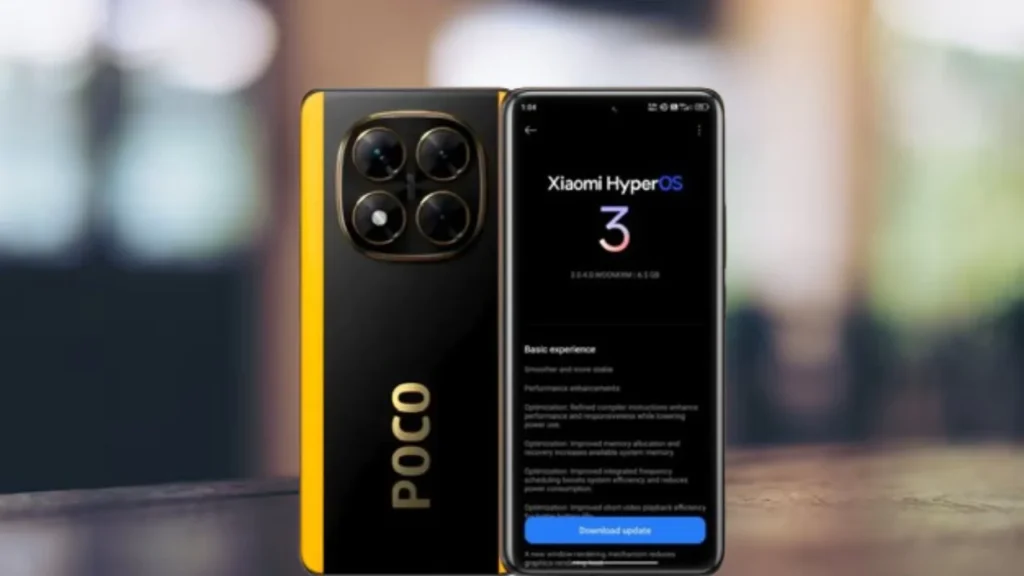
What “Mi Pilot” vs “Public Open” Actually Means for You
I get this question all the time, so let me clear it up once and for all.
Mi Pilot means the update is in a controlled early-access phase. Xiaomi sends it to a small batch of users first to collect real-world feedback. If no major bugs show up, they open it to everyone. It’s basically a soft launch — and it’s actually a good sign, because it means the update is almost done.
Public (Open) means the floodgates are open. Anyone with that device can receive the OTA notification or manually trigger the update check.
For the POCO X7 and Redmi Note 14 Pro 5G, we’re still waiting on the global regions to move from “confirmed in China” to “Mi Pilot” to “Public.” But given how fast Xiaomi has been moving this week — look at that table above — I wouldn’t be surprised if we wake up tomorrow to a notification.
Why the May 2026 Security Patch Actually Matters
Some people skip past the security patch detail and just focus on the OS number. I get it — but hear me out, because this one is worth paying attention to.
The May 2026 patch is Xiaomi’s most current security update. It closes vulnerabilities that were identified in recent months, which means your phone gets real protection against threats that didn’t even exist when it was launched. For a device you use for banking, messaging, and storing personal photos, that’s not a small thing.
On top of that, HyperOS 3.1 itself brings meaningful system-level improvements. If you’re still on HyperOS 2.x, the difference in fluidity and app management is something you’ll feel the first time you open your app drawer.
I recently wrote a deeper breakdown of the apps that dropped with HyperOS 3.1 — the ones that make your POCO or Redmi feel completely refreshed. I’m not exaggerating when I say some of these system apps are the biggest quality-of-life upgrades HyperOS has seen. If you haven’t checked that piece yet, it’s worth a few minutes of your time before the update hits.
These aren’t just cosmetic changes either. Some of the updated apps affect how notifications behave, how the control center responds, and how battery management works in the background. Once you understand what’s in HyperOS 3.1 at the app level, you’ll realize this isn’t just a routine patch — it’s a genuine upgrade to how your device functions day to day.
A Special Note for Redmi Note 15 4G Users — And Why It Matters for POCO X7 Owners Too
I want to highlight something that happened today for the Redmi Note 15 4G, because it’s a great sign for our community.
As of today, every single regional variant of the Redmi Note 15 4G is now running HyperOS 3.1. Indonesia was the last region to receive it, and with that update live, 100% of Redmi Note 15 4G users worldwide are on HyperOS 3.1.
Why does that matter if you have a POCO X7 or Redmi Note 14 Pro 5G? Because it shows that Xiaomi is systematically completing full global rollouts before moving on. Our devices are in that pipeline, and they’re moving fast.
If you have a Redmi Note 15 4G and you’re somehow still on HyperOS 2.2 and haven’t received the OTA notification — don’t wait. Go download and flash it manually. The update is live and stable.
How to Know If Your Device Is in the Right Region for This Update
Here’s something a lot of people get wrong — and I see the confusion in comments every single day.
Not every POCO X7 or Redmi Note 14 Pro 5G is in the same region. Even if you bought your phone in the US, the firmware region could be set to India, Europe, or Global MI. And those regions receive updates on different schedules.
This matters more than most people realize. I wrote a full guide on how to identify your Xiaomi’s firmware region before HyperOS 3.1 arrives, and I genuinely recommend reading it right now — before the update starts rolling out — so you know exactly what to expect for your specific device.
Understanding your region also helps you avoid a common frustration: thinking you were skipped when the update is actually just rolling out to your region on a slightly different timeline. Once you know which region your phone is in, tracking updates becomes so much easier and less stressful.
What to Do Right Now While You Wait
I know the waiting is the hardest part. But here are the practical steps I’d recommend right now:
1. Check your current HyperOS version. Go to Settings → About Phone → MIUI/HyperOS version. If you’re on HyperOS 2.x, you’re about to get a significant jump.
2. Make sure your storage is clear. HyperOS 3.1 updates can be 2–4GB depending on your current version. Clear at least 5GB to be safe.
3. Keep your battery above 50%. Xiaomi recommends at least 50% charge before starting a major update. Plug in if you’re close.
4. Don’t keep tapping “Check for Updates” every 5 minutes. I know it’s tempting. But OTA rollouts happen in waves — sometimes the system catches it on the first check, sometimes it takes a few hours. Manual checks don’t speed up the wave.
5. Watch for short-form content and blog notifications. I post updates in real time the moment they drop. If this update goes live in the middle of the day, I’ll have a short video or blog post up immediately.
If you want to understand what the update experience looks like for similar devices that already received it, I covered the HyperOS 3.1 rollout for Redmi Note 14, POCO X7 Pro, and POCO X6 5G in detail — including what to do right after the update installs to make sure everything runs smoothly.
That article also covers some post-update steps that a lot of people skip and then regret later. Things like resetting animation settings, checking app permissions that get reset during the update, and making sure your always-on display preferences carried over correctly.
The Bigger Picture: HyperOS 3.1 Is Moving Faster Than Anyone Expected
Step back for a second and look at what’s happening across the Xiaomi ecosystem this week.
Devices from the Xiaomi 12 series all the way to the Xiaomi 17 are getting HyperOS 3.1. The POCO F7 Ultra is getting it across three regions simultaneously. The Xiaomi 15 Ultra, Xiaomi 15T Pro, Xiaomi Pad 6S Pro — it’s a tidal wave.
This is the fastest HyperOS major version rollout I’ve tracked since launching this channel. Xiaomi is clearly on a mission to get the entire active device lineup onto 3.1 before the end of May.
I recently put together a full breakdown of every Xiaomi device that received HyperOS 3.1 — including POCO X7 Pro and 15+ other models updated in a single day. If you want to see just how wide this rollout has become, that article has the complete picture.
And for those who want even more context on how this rollout has progressed — from the early adopters to today — I also covered HyperOS 3.1 coming to POCO F6 Pro, Xiaomi 14T, and the approach to POCO X6 Pro. Watching how Xiaomi staged that earlier wave gives you a really good sense of how the current wave — the one that includes our devices — is likely to play out.
The pattern is clear: CN region confirms → global regions follow within days → public rollout opens. We’re at step one. Step two is imminent.
Quick Highlights
- POCO X7 and Redmi Note 14 Pro 5G are confirmed to receive HyperOS 3.1 in the Chinese region
- The update carries the May 2026 security patch — Xiaomi’s most current
- Over 24 devices received HyperOS updates today across multiple regions
- The Redmi Note 15 4G is now fully updated in all regions globally
- POCO F7 Ultra received HyperOS 3.1 in Global, Europe, and Russia simultaneously
- The update could arrive on POCO X7 / Redmi Note 14 Pro 5G global units within days
- If your device still shows HyperOS 2.2 and is on a fully rolled-out model — update manually now
- Enable blog/channel notifications so you don’t miss the moment the update goes live
FAQ — Everything You’re Probably Asking Right Now
Q: When exactly will HyperOS 3.1 arrive on my POCO X7 or Redmi Note 14 Pro 5G? A: The update is confirmed for the Chinese region with the May 2026 patch. Global regions typically follow within a few days to a week. There’s no official date yet, but based on Xiaomi’s current rollout pace, it could arrive any day now.
Q: Is the POCO X7 the same as the Redmi Note 14 Pro 5G? A: Yes. The POCO X7 and Redmi Note 14 Pro 5G share the same hardware. They receive the same updates, sometimes under slightly different firmware labels depending on region.
Q: What is Mi Pilot and do I need to apply for it? A: Mi Pilot is Xiaomi’s early access program for software updates. A limited number of users receive the update first for testing. Some devices allow you to apply through the Updater app; others are selected automatically. After the Mi Pilot phase, the update opens to all users.
Q: What’s new in HyperOS 3.1 compared to HyperOS 2? A: HyperOS 3.1 brings improved system fluidity, updated core apps, enhanced AI features, better battery management, and the latest security patches. Users coming from HyperOS 2.x report a noticeable improvement in day-to-day performance.
Q: Can I manually install HyperOS 3.1 before the OTA arrives? A: Yes, once the firmware file is available for your region. You can sideload it using the local update method in your Updater app. Make sure to download only from trusted sources to avoid corrupted builds.
Q: My device is on HyperOS 2.2 and I haven’t received any update — what should I do? A: First, verify your device’s firmware region. Then check if a stable update is available for your region. If it is, and you’re not receiving the OTA, you can download the firmware manually and update via the local install option.
Q: Does the May 2026 security patch mean my phone is fully protected? A: The May 2026 patch addresses all publicly disclosed vulnerabilities up to that date. It’s the most current patch Xiaomi is shipping, so yes — your device will be at the highest level of protection Xiaomi currently offers.
Author’s Take — Why This Update Matters More Than You Think
I’ve been covering Xiaomi updates for a long time. And I can tell you honestly: the pace of this HyperOS 3.1 rollout is something different.
When I look at that list of devices updated today — more than two dozen models across every major region — and I see our devices confirmed for the next wave, I feel genuinely excited. Not because it’s just software, but because it’s a signal that Xiaomi is taking the POCO X7 and Redmi Note 14 Pro 5G seriously as devices worth maintaining.
A lot of mid-range phones at this price point get deprioritized after 12 months. They get the bare minimum. What’s happening here is the opposite — we’re getting a major OS update with the freshest security patch available, on a device that’s still very much in its prime.
If you have this phone, don’t sit on this update when it arrives. Install it. Enjoy the improvements. And keep your notifications on, because when it drops — and it will drop soon — I’ll be here to tell you exactly what changed and what to do first.
This one’s worth the wait. But I don’t think we’ll be waiting long.
One thought on “The POCO X7 and Redmi Note 14 Pro 5G are about to receive HyperOS 3.1.”