
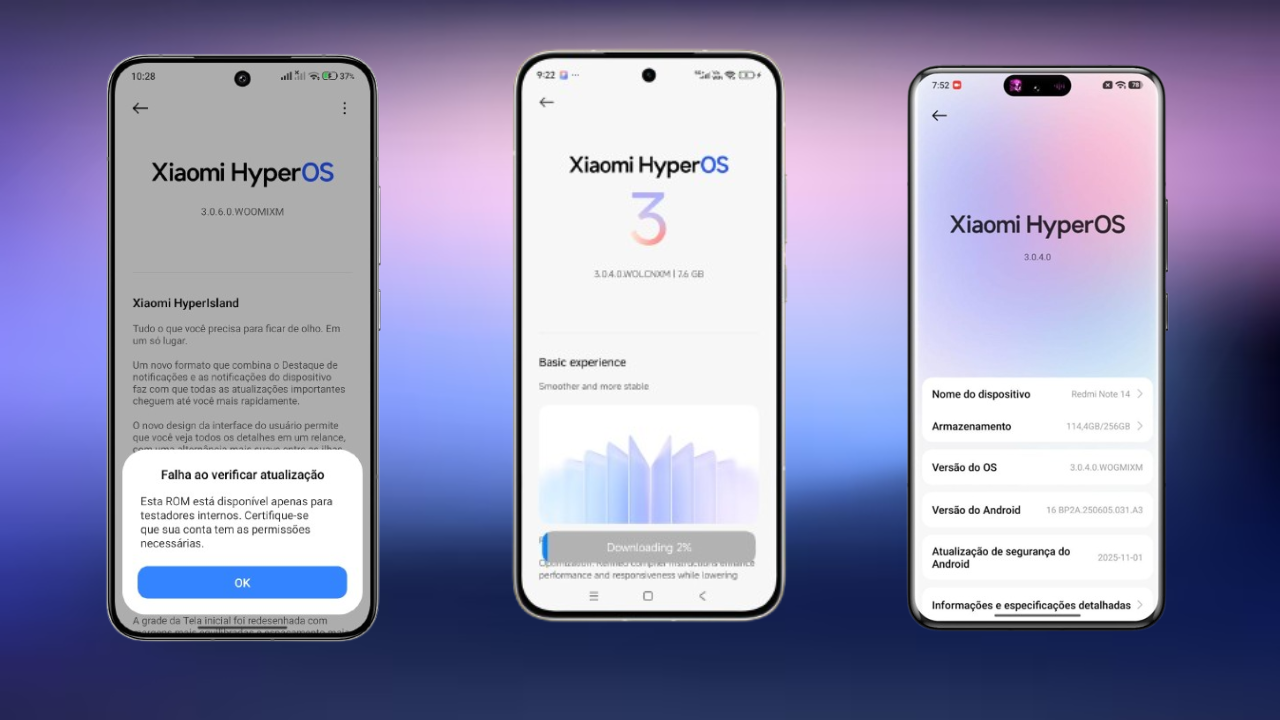
How to Identify Your Xiaomi’s Region — Learn This Before HyperOS 3.1 Arrives!
The HyperOS 3 global rollout has hit full stride in the first week of April 2026. Devices like the Xiaomi 14T Pro, Redmi Note 14 Pro, Poco F5, Poco M7 4G, Redmi 15, and Xiaomi Pad 7 Pro have all received their Android 16-based public builds this week alone. But there’s one detail most users overlook — and it makes all the difference when you’re trying to monitor, force, or report an update: knowing how to read your device’s ROM code.
HyperOS 3.1 is already knocking on the door. Experimental builds are circulating, and the first devices in the Mi Global region are already running this version in early testing. Before that wave hits your device, understanding the region identification system isn’t optional — it’s essential. This guide breaks down every part of the ROM code structure, delivers the complete build table for April 3, 2026, and gives you the full context you need to stay ahead.
What Is the Xiaomi ROM Code and Where Do You Find It?
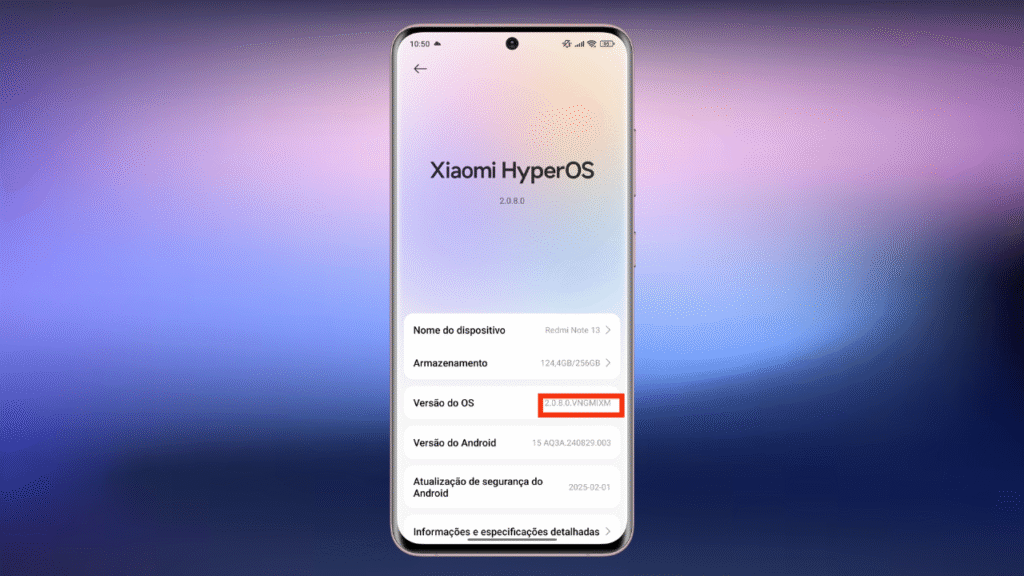
Every Xiaomi, Redmi, and POCO device displays its system version in a standardized alphanumeric format. You can find this code at Settings > About Phone > MIUI/HyperOS Version. Once you know how to read it, the entire update picture becomes clear.
The code follows a precise structure:
- First letter — indicates the Android base version. V = Android 15. W = Android 16. If your code starts with W, your device is already on Android 16 with HyperOS 3. If it starts with V, it remains on Android 15.
- Middle section — the internal codename of the device (e.g., “NRL” for the Poco X6 Pro, “WNL” for Note-line variants).
- Last four letters — the region identifier. This is the most critical piece of data for update tracking.
Practical example: A Poco X6 Pro showing OS3.0.4.0.WNLMIXM reads as: W = Android 16 / NL = codename segment / MI = Mi Global standard / XM = Xiaomi standard suffix. When reporting bugs in forums or community channels, always share those last four letters — it’s the fastest way to determine whether an issue is region-specific or global.
Complete Xiaomi / POCO / Redmi Region Code Table
| Last 4 Letters | Region |
|---|---|
| MXIM | Mi Global (Standard Global) |
| EUXM | Europe (EEA) |
| INXM | India |
| TWXM | Taiwan |
| TRXM | Turkey |
| RUXM | Russia |
| IDXM | Indonesia |
| JPXM | Japão |
| CNXM | China (Chinese ROM) |
Why This Matters Right Now: HyperOS 3.1 Is Already Arriving
Knowing your region isn’t just technical curiosity. In April 2026, the stakes are higher than ever. HyperOS 3.1 images are already in circulation, and devices in the Mi Global region are running early experimental versions. Xiaomi follows a consistent historical rollout pattern:
- Mi Global (MXIM) — almost always the first international region to receive stable builds and Mi Pilot/Mi Palette access.
- Europe (EUXM) and India (INXM) — follow within one to two weeks, after passing through the Mi Pilot filter.
- Taiwan (TWXM), Turkey (TRXM), Russia (RUXM) — arrive in the next wave, typically 5–10 days after Mi Global opens to the public.
- Indonesia (IDXM) — tends to close out the global rollout cycle alongside Russia and Taiwan.
This matters for diagnosis. If you have a Mi Global device and haven’t received HyperOS 3 yet, that situation is fundamentally different from a Taiwan device in the same position. The region defines your queue, your timeline, and your troubleshooting path. When HyperOS 3.1 begins rolling out via Mi Palette — the successor to Mi Pilot in some regional labels — devices that haven’t yet received even the base HyperOS 3 will need extra attention. Some may jump directly to 3.1, as happened with select Redmi Note 15 models.
HyperOS 3 Builds Released on April 3, 2026 — Complete Table
The following is the full, unabridged list of every HyperOS 3 build released publicly on April 3, 2026. No summaries. No omissions. Each device is treated as a unique entity with its own ROM, region, and status.
| Device | ROM / Build | Region | Region Code | Android Base | Security Patch | Status |
|---|---|---|---|---|---|---|
| Xiaomi 14T Pro | OS3.0.4.0 | Mi Global | MXIM | Android 16 | March 2026 | Released — Open to Public |
| Redmi Note 14 Pro (5G) | OS3.0.5.0 | Mi Global | MXIM | Android 16 | March 2026 | Released — Open to Public |
| Redmi 15 / Poco M7 4G | OS3.0.2.0 | Taiwan | TWXM | Android 16 | March 2026 | Released — Open to Public |
| Redmi 15 / Poco M7 4G | OS3.0.2.0 | Turkey | TRXM | Android 16 | March 2026 | Released — Open to Public |
| Xiaomi Pad 7 Pro | OS3.0.6.0 | Europe | EUXM | Android 16 | March 2026 | Released — Open to Public |
| Poco F5 | OS3.0.3.0 | Mi Global | MXIM | Android 15 | March 2026 | Released — Open to Public |
| Redmi Note 15 Pro Plus 5G / Poco M8 Pro 5G | OS3.0.1.0 | India | INXM | Android 16 | March 2026 | Released — Open to Public |
| Redmi Note 13 5G | OS3.0.2.0 | Mi Global | MXIM | Android 15 | March 2026 | Released — Open to Public |
| Redmi Note 14 Pro 4G | OS3.0.3.0 | Europe | EUXM | Android 16 | March 2026 | Released — Open to Public |
| Poco M7 4G / Redmi 15 4G | OS3.0.2.0 | Turkey | TRXM | Android 16 | March 2026 | Released — Open to Public |
| Poco M7 4G / Redmi 15 4G | OS3.0.2.0 | Taiwan | TWXM | Android 16 | March 2026 | Released — Open to Public |
| Redmi Note 14 Pro 4G | OS3.0.5.0 | Mi Global | MXIM | Android 16 | March 2026 | Released — Open to Public |
| Poco X7 | Build in preparation | Mi Global | MXIM | Android 16 | March 2026 (pending) | Awaiting — Build in Preparation |
Note on the Poco F5: The build code starts with V, not W. This confirms the device remains on an Android 15 base and is not eligible for the Android 16 upgrade. The HyperOS 3 update for this device brings interface and security improvements, but the deeper platform optimizations tied to Android 16 do not apply.
Note on the Redmi Note 13 5G: Same situation as the Poco F5 — the first letter of the build code is V, base Android 15, and the device is not eligible for Android 16.
Note on the Poco X7: As of April 3, 2026, the build for the Mi Global region is still in preparation. The March 2026 security patch has not yet been integrated. No release date has been announced.
The 3 Phases of HyperOS Updates — Definitive Explanation
Xiaomi distributes every HyperOS update through three progressive public phases. A fourth phase — internal developer testing — precedes all of them but is never accessible to regular users. The cycle that matters for any Poco, Redmi, or Xiaomi owner begins with Mi Pilot.
Phase 1 — Mi Pilot (Closed Beta) The first public phase. The build is available exclusively to users enrolled in Xiaomi’s official beta testing program, also called Mi Palette in some regional versions of the system. Enrolled users can either wait for the automatic notification or force the download through the three-dot menu on the system update screen. It’s common for some non-enrolled users to receive this phase — particularly those who have changed their device’s region setting or have specific account configurations. This isn’t a bug; it’s a side effect of how Xiaomi’s distribution servers work.
Phase 2 — Partial (Gradual Rollout) Once the build passes Mi Pilot, Xiaomi begins pushing it via OTA to an increasing percentage of the eligible device base — typically starting at 1–5% and expanding over subsequent days as stability is confirmed. During this phase, it’s possible but not guaranteed to receive the update notification without Mi Pilot enrollment.
Phase 3 — Open to Public The final phase. The update becomes available to 100% of eligible devices in that region simultaneously. Every user with the correct device and region code receives the OTA notification automatically, without taking any manual action. All builds marked “Released — Open to Public” in the table above are in this phase as of April 3, 2026.
What Changes in HyperOS 3 and Android 16 — The Technical Overview
The HyperOS 3 transition is a complete platform shift, not a security patch cycle. Devices moving from Android 15 to Android 16 under HyperOS 3 receive:
- Deep compiler optimizations — improved responsiveness and lower energy consumption
- Memory allocation and recovery improvements — more system and app memory available at all times
- New window rendering engine — reduced GPU load across all interface layers
- Over 100 refined system animation scenes — more natural motion throughout the OS
- Redesigned HyperIsland — Xiaomi’s dynamic island implementation now combines Notification Spotlight and traditional notifications in a unified space, with smoother transitions and gesture-driven window expansion
- Post-quantum cryptography — an advanced security layer implemented in the most recent builds
- New visual design system — redesigned icon grid with improved spacing, cleaner status bar, and a standardized color palette
For devices not eligible for Android 16 — such as the Poco F5 and Redmi Note 13 5G in the table above — HyperOS 3 arrives based on Android 15. These devices receive interface updates and security improvements, but the engine-level optimizations that depend on Android 16 are not included in their builds.
Fixing Bugs After OTA Without a Factory Reset
One of the most common problems after any HyperOS OTA update is residual bugs — animation glitches, app crashes, or battery drain that doesn’t resolve on its own. The good news is that a factory reset is almost never necessary. The correct method is to install the full package through the three-dot menu on the system update screen. This reinstalls a clean version of the build without wiping user data.
For a detailed step-by-step walkthrough of this process, you can check the complete guide at How to Fix Any Bug After an OTA Update in HyperOS 3. The guide covers every scenario — from persistent lag after the update to system apps that stop responding — and confirms that this method works across all HyperOS 3 builds, including those released this week. With HyperOS 3.1 around the corner, having this fix ready is practical preparation.
POCO Launcher iOS-Style Recents: A Feature Already Live on HyperOS 3
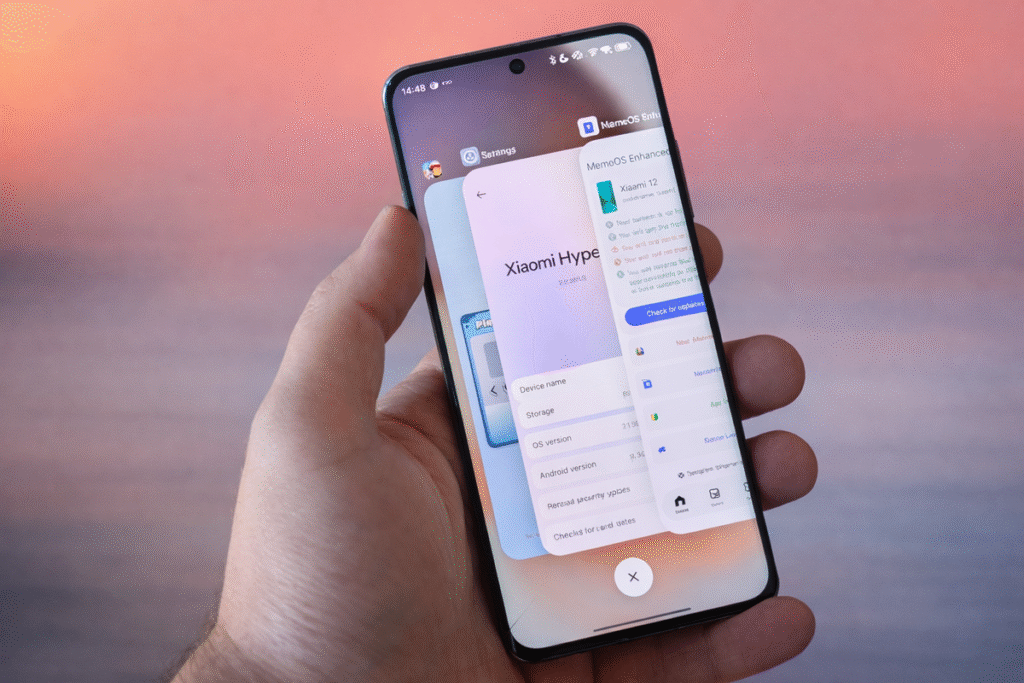
While the community focuses on the Android 16 transition, the POCO Launcher has already shipped one of the most visually significant updates of the cycle. The launcher now offers iOS-style recents — a card-based recent apps view that can be enabled via ADB, compatible with both HyperOS 2.2 and HyperOS 3. The visual shift is dramatic for users accustomed to the standard Android multitasking drawer, and it offers a preview of the direction Poco Launcher 3 is heading in HyperOS 3.1, where performance gains of up to 30% have been recorded in Chinese beta builds.
You can see exactly how to enable this feature and what it looks like in practice at Poco Launcher Update Brings iOS-Style Recents to HyperOS 3. Understanding which launcher version your device is running — tied directly to your ROM region — matters for knowing when you’ll get this update automatically versus needing to apply it manually.
HyperOS 3.1 Dynamic Island: What’s Actually Changing
The most architecturally significant feature in HyperOS 3.1 is the redesigned HyperIsland — Xiaomi’s dynamic island implementation. In HyperOS 3.0, the island only responds to apps that Xiaomi has approved internally. In HyperOS 3.1, that changes completely: any third-party developer can integrate with HyperIsland through the native Android 16 API, without requiring specific Xiaomi approval. Delivery apps, payment platforms, messaging services, and fitness trackers are the most immediate use cases. The implications for how users interact with the notification space are significant.
For a side-by-side comparison of the visual and functional differences between HyperOS 3.0 and 3.1, including exactly how the island handles concurrent notifications and gesture-based expansion, the full breakdown is available at HyperOS 3.1 Dynamic Island Gets Revolutionary Design Overhaul. This is the clearest signal yet of where Xiaomi’s software platform is heading in the second half of 2026.
What We Already Know About HyperOS 3.1
Based on detected beta builds circulating as of April 2026, three core areas of change define HyperOS 3.1:
- HyperIsland with third-party API integration — open developer access via Android 16’s native API layer, enabling any app to surface activity in the island without Xiaomi certification
- Poco Launcher 3 performance refinements — redesigned Control Center animations, new integrated notification hub, and up to 30% speed improvement on app transition and camera launch tasks compared to HyperOS 3.0 in early Chinese beta testing
- Mi Palette as the primary entry point — devices already running HyperOS 3 with the March 2026 security patch are expected to be the first eligible for HyperOS 3.1 via Mi Palette; devices still waiting for HyperOS 3 may receive it directly in certain cases, following the same pattern seen with some Redmi Note 15 models
The Poco X6 Pro is confirmed on the eligibility list for both HyperOS 3.1 and the eventual HyperOS 4 based on Android 17.
Complete Device List — April 3, 2026 HyperOS 3 Updates
- Xiaomi 14T Pro — HyperOS 3, build OS3.0.4.0, Mi Global (MXIM), Android 16, March 2026 patch, open to public
- Redmi Note 14 Pro (5G) — HyperOS 3, build OS3.0.5.0, Mi Global (MXIM), Android 16, March 2026 patch, open to public
- Redmi 15 / Poco M7 4G — HyperOS 3, build OS3.0.2.0, Taiwan (TWXM), Android 16, March 2026 patch, open to public
- Redmi 15 / Poco M7 4G — HyperOS 3, build OS3.0.2.0, Turkey (TRXM), Android 16, March 2026 patch, open to public
- Xiaomi Pad 7 Pro — HyperOS 3, build OS3.0.6.0, Europe (EUXM), Android 16, March 2026 patch, open to public
- Poco F5 — HyperOS 3, build OS3.0.3.0, Mi Global (MXIM), Android 15 (not eligible for Android 16), March 2026 patch, open to public
- Redmi Note 15 Pro Plus 5G / Poco M8 Pro 5G — HyperOS 3, build OS3.0.1.0, India (INXM), Android 16, March 2026 patch, open to public
- Redmi Note 13 5G — HyperOS 3, build OS3.0.2.0, Mi Global (MXIM), Android 15 (not eligible for Android 16), March 2026 patch, open to public
- Redmi Note 14 Pro 4G — HyperOS 3, build OS3.0.3.0, Europe (EUXM), Android 16, March 2026 patch, open to public
- Poco M7 4G / Redmi 15 4G — HyperOS 3, build OS3.0.2.0, Turkey (TRXM), Android 16, March 2026 patch, open to public
- Poco M7 4G / Redmi 15 4G — HyperOS 3, build OS3.0.2.0, Taiwan (TWXM), Android 16, March 2026 patch, open to public
- Redmi Note 14 Pro 4G — HyperOS 3, build OS3.0.5.0, Mi Global (MXIM), Android 16, March 2026 patch, open to public
- Poco X7 — awaiting March 2026 security patch; build in preparation for Mi Global region
Key Takeaways
- The last four letters of your ROM code identify your device’s region: MXIM = Mi Global, EUXM = Europe, INXM = India, TWXM = Taiwan, TRXM = Turkey, RUXM = Russia, IDXM = Indonesia, JPXM = Japão, CNXM = China
- The first letter of the build code identifies the Android base: V = Android 15, W = Android 16
- Mi Global (MXIM) historically leads all international regions in receiving stable builds
- The Poco F5 and Redmi Note 13 5G receive HyperOS 3 based on Android 15 — neither device is eligible for the Android 16 upgrade
- The Poco X7 is awaiting the March 2026 patch; its build is in preparation for Mi Global
- HyperOS 3.1 images are already circulating and early Mi Global devices are running experimental versions
- Devices with the March 2026 security patch already installed are expected to be the first candidates for HyperOS 3.1 via Mi Palette
- Post-OTA bugs can be fixed without a factory reset by installing the full package through the three-dot menu on the update screen
- Poco Launcher already delivers iOS-style recents via ADB, compatible with HyperOS 2.2 and HyperOS 3
- HyperOS 3.1’s HyperIsland gains third-party app integration through Android 16’s native API — no Xiaomi certification required
FAQ — HyperOS 3 Region Identification and Update Questions
1. How do I identify my Xiaomi’s region from the ROM code? Go to Settings > About Phone. Check the last 4 letters: MXIM = Mi Global, EUXM = Europe, INXM = India.
2. What does the letter W or V mean at the start of a HyperOS build code? W = Android 16 base. V = Android 15 base. It indicates the OS layer, not the HyperOS version number.
3. Why is my Poco F5 getting HyperOS 3 on Android 15? The Poco F5 is not eligible for Android 16. Its HyperOS 3 build runs on Android 15, shown by the V prefix.
4. Which region receives HyperOS updates first outside China? Mi Global (MXIM) leads internationally. Europe and India follow. Taiwan, Turkey, and Russia arrive days later.
5. Has the Poco X7 received HyperOS 3 with the March 2026 patch yet? No. As of April 3, 2026, the Mi Global build is still in preparation with the March patch pending.
6. How do I force a HyperOS 3 update on my device? Go to Settings > About Phone > HyperOS logo > three-dot menu > download the current ROM’s full package.
7. Will having the March 2026 patch installed speed up my HyperOS 3.1 access? Yes. Devices with the March 2026 patch are expected to be first in line for HyperOS 3.1 via Mi Palette.
8. Where can I track all HyperOS 3 updates in real time? Follow the HyperOS 3 Global Update Tracker, updated continuously with builds, regions, and release status.
If you want to go deeper on what’s coming for Xiaomi’s software platform, check out our HyperOS 3 Global Update Tracker in Real Time — updated continuously with builds, regions, and release dates for every eligible device as the HyperOS 3.1 rollout accelerates.