
Xiaomi HyperOS Update Deadline: This Date Could Change Everything for Your Device
If you own a Xiaomi, POCO, or Redmi smartphone or tablet, there is one date you should write down right now — the day your device officially stops receiving HyperOS security patches and Android version upgrades. That date determines how much longer your phone remains protected against digital threats, and for tens of millions of users worldwide, it could be closer — or much farther away — than expected.
HyperOS, Xiaomi’s proprietary Android-based operating system, has become one of the most ambitious software projects in the Android ecosystem. In a major policy shift that caught analysts off guard, Xiaomi officially extended the software support window for a significant number of its flagship, mid-range, and even budget devices. Some models now carry a full five-year security update commitment — a benchmark that outpaces what many premium Android rivals currently offer.
This article compiles every confirmed device, end-of-life date, and Android version roadmap based on official data from Xiaomi’s Android Enterprise Recommended (AER) program and announcements made during device launches. Whether you’re rocking a budget POCO C85 or a premium Xiaomi 15T Pro, your update timeline is here.
Why Xiaomi’s HyperOS Support Policy Is a Big Deal in 2026
For years, the biggest criticism of Android manufacturers — particularly those outside Samsung — was the short lifespan of software support. Buying a mid-range phone often meant receiving only two years of Android updates before the device became a security liability. Xiaomi is directly challenging that narrative.
The company’s decision to extend HyperOS support across more than 70 devices is significant for several reasons. First, it dramatically increases the long-term value of devices at every price point. A POCO C85 5G selling for around $120 USD that receives Android updates through 2031 represents extraordinary value by any industry standard. Second, it signals a strategic alignment with Google’s broader push for longer device lifespans — an initiative reflected in Android’s own evolving certification requirements.
From a sustainability perspective, longer software support means fewer devices end up in landfills prematurely. A phone that continues to receive security patches in 2030 is a phone that doesn’t need to be replaced in 2027. That’s a meaningful environmental argument as much as it is a consumer one.
The Xiaomi AER portal, which tracks Android Enterprise Recommended devices and their official support commitments, serves as the authoritative source for all end-of-life dates referenced in this article.
Full Table: Xiaomi, POCO, and Redmi Devices With Remaining Update Time
The table below lists all devices with confirmed end-of-life dates, sorted by remaining support time. This is the most comprehensive update deadline tracker available based on official Xiaomi AER data.
| Device Name | Launch Date | End-of-Life Date | Remaining Support |
|---|---|---|---|
| Redmi Pad 2 | 2025-06 | 2032-06-15 | ~6 years 4 months |
| Redmi Pad 2 4G | 2025-06 | 2032-06-15 | ~6 years 4 months |
| Redmi Note 15 Pro / Pro 5G / Pro+ 5G | 2026-01-15 | 2032-01-15 | ~5 years 11 months |
| Redmi Note 15 / 15 5G | 2026-01-15 | 2032-01-15 | ~5 years 11 months |
| POCO M8 5G / Pro 5G | 2026-01-08 | 2032-01-08 | ~5 years 11 months |
| POCO F8 Ultra / F8 Pro | 2025-11-26 | 2031-11-26 | ~5 years 10 months |
| Redmi 15C 5G | 2025-09-30 | 2031-09-30 | ~5 years 8 months |
| Xiaomi 15T / 15T Pro | 2025-09-24 | 2031-09-24 | ~5 years 8 months |
| POCO C85 / Redmi 15C | 2025-08-28 | 2031-08-28 | ~5 years 7 months |
| POCO M7 | 2025-08-19 | 2031-08-19 | ~5 years 6 months |
| POCO F7 | 2025-06-24 | 2031-06-24 | ~5 years 5 months |
| POCO F7 Pro / Ultra | 2025-03-27 | 2031-03-27 | ~5 years 2 months |
| Xiaomi Pad 7 | 2025-03 | 2031-03 | ~5 years 2 months |
| Xiaomi 15 Ultra / 15 | 2025-03-02 | 2031-03-01 | ~5 years 1 month |
| Redmi Note 14 | 2025-01-10 | 2031-03-01 | ~5 years 1 month |
| Xiaomi 14T / 14T Pro | 2024-09-26 | 2029-09-26 | ~3 years 8 months |
| Redmi 15 | 2025-09-22 | 2029-09-22 | ~3 years 8 months |
| Redmi Pad 2 Pro / Pro 5G | 2024-09-22 | 2029-09-22 | ~3 years 8 months |
| POCO Pad M1 | 2024-09-22 | 2029-09-22 | ~3 years 8 months |
| Redmi 15 5G | 2025-08 | 2029-08-01 | ~3 years 6 months |
| Xiaomi MIX Flip | 2024-09-26 | 2029-07-18 | ~3 years 5 months |
| Redmi A5 | 2025-05-19 | 2029-04-30 | ~3 years 3 months |
| Xiaomi Pad 7 Pro | 2025-03 | 2029-03 | ~3 years 1 month |
| Xiaomi 14 Ultra | 2024-03-15 | 2029-03-15 | ~3 years 1 month |
| Xiaomi 14 | 2024-02-25 | 2029-02-25 | ~3 years 1 month |
| POCO M7 Pro 5G | 2025-04-07 | 2029-01-09 | ~2 years 11 months |
| Xiaomi 13T / 13T Pro | 2023-10-04 | 2028-10-04 | ~2 years 8 months |
| Redmi 14C / POCO C75 | 2024-10-10 | 2028-09-26 | ~2 years 8 months |
| Xiaomi 13 Ultra | 2023-06-12 | 2028-06-12 | ~2 years 4 months |
| Xiaomi 13 / 13 Pro | 2023-03-08 | 2028-03-08 | ~2 years 1 month |
| Redmi Note 13 Series | 2024-01-15 | 2028-01-15 | ~1 year 11 months |
| Redmi 12 | 2023-06-16 | 2027-06-16 | ~1 year 4 months |
| Xiaomi 13 Lite | 2023-03-02 | 2027-03-02 | ~1 year 1 month |
| Xiaomi 12T / 12T Pro | 2022-10-13 | 2026-10-13 | ~8 months |
| Redmi Note 12 5G | 2023-03-23 | 2026-03-23 | ~1 month |
| Xiaomi 12 / 12 Pro | 2022-03-17 | 2026-03-17 | ~1 month |
| Redmi 12C | 2023-03-10 | 2026-03-10 | ~1 month |
⚠️ Critical Alert for 2026: If your device shows an end-of-life date of March or October 2026, act now. The Xiaomi 12 / 12 Pro, Redmi Note 12 5G, and Redmi 12C are among the models exiting software support within weeks. After that date, no further security patches will be issued.
Complete List of 70 Devices Confirmed to Receive Android 17 via HyperOS
Xiaomi 17 Series (2026 Launch)
The upcoming flagship lineup will receive full support from day one:
- Xiaomi 17 Ultra
- Xiaomi 17 Ultra Leica / Leitzphone
- Xiaomi 17
- Xiaomi 17 Pro
- Xiaomi 17 Pro Max
Xiaomi 15 Series (2025 Models)
- Xiaomi 15 Ultra — Launch: February 2025 | Runs Android 15 → Will receive: Android 16, 17, 18, 19 | Security support through: February 2031
- Xiaomi 15 — Launch: February 2025 | Runs Android 15 → Will receive: Android 16, 17, 18, 19 | Security support through: February 2031
- Xiaomi 15S Pro
- Xiaomi 15 Pro
- Xiaomi 15T — Launch: September 2025 | Runs Android 15 → Will receive: Android 16, 17, 18, 19 | Support through: September 2031
- Xiaomi 15T Pro — Launch: September 2025 | Runs Android 15 → Will receive: Android 16, 17, 18, 19, 20 | Support through: September 2031 | Update frequency: every 90 days
Standout fact: The Xiaomi 15T Pro is one of only a handful of devices on this entire list confirmed to receive Android 20 — making it an exceptionally future-proof investment.
Xiaomi 14 Series (Previous Flagship Generation)
- Xiaomi 14 Ultra — Launch: February 2024 | Android 14 → Will receive: Android 15, 16, 17, 18 | Support through: February 2029 | Update cadence: 90 days
- Xiaomi 14 — Launch: February 2024 | Android 14 → Will receive: Android 15, 16, 17, 18 | Support through: February 2029 | Update cadence: 90 days
- Xiaomi 14 Pro
- Xiaomi 14T — Launch: September 2024 | Android 14 → Will receive: Android 15, 16, 17, 18 | Support through: September 2029
- Xiaomi 14T Pro — Launch: September 2024 | Android 14 → Will receive: Android 15, 16, 17, 18 | Support through: September 2029
- Xiaomi 14 CIVI
- Xiaomi CIVI 4 Pro
- Xiaomi CIVI 5 Pro
Xiaomi 13 Series (Still Receiving Updates)
- Xiaomi 13 Ultra
- Xiaomi 13
- Xiaomi 13 Pro
- Xiaomi 13T — Launch: September 2023 | Android 13 → Will receive: Android 14, 15, 16, 17 | Support through: July 2028 | Update cadence: 90 days
- Xiaomi 13T Pro — Launch: September 2023 | Android 13 → Will receive: Android 14, 15, 16, 17 | Support through: July 2028 | Update cadence: 90 days
POCO F Series (Performance Value Tier)
- POCO F8 Ultra (Redmi K90 Pro Max)
- POCO F8 Pro (Redmi K90)
- POCO F7 Ultra (Redmi K80 Pro)
- POCO F7 Pro (Redmi K80)
- POCO F7 (Redmi Turbo 4 Pro)
- POCO F6 Pro (Redmi K70)
- POCO F6 (Reddi Turbo 3)
POCO X Series (Popular Mid-Range)
- POCO X7 Pro (Redmi Turbo 4)
- POCO X7 (Redmi Note 14 Pro)
- POCO X6 Pro (Redmi K70e)
POCO M Series (Budget With Updates)
- POCO M8 Pro 5G (Redmi Note 15 Pro+)
- POCO M8 5G (Redmi Note 15 5G)
- POCO M7 Plus (Redmi 15)
- POCO M7 5G (Redmi 14R 5G)
- POCO M7 4G (Redmi 15 4G)
POCO C Series (Accessible Budget Tier)
- POCO C85 5G (Redmi 15C 5G) — Launch: September 2025 | Android 15 → Will receive: Android 16, 17, 18, 19 | Support through: September 2031 | Available for approximately $120 USD
- POCO C85 4G (Redmi 15C 4G) — Launch: September 2025 | Android 15 → Will receive: Android 16, 17, 18, 19 | Support through: October 2031
- POCO C71 (Redmi A5 4G)
The POCO C85 5G at $120 represents a compelling case study in democratized long-term software support. Four future Android versions and security coverage through 2031 on a sub-$150 device is an industry standout. Few competitors at this price point come close.
Redmi Note 15 Series (Record-Breaking Support Window)
- Redmi Note 15 5G — Launch: January 2026 | Android 15 → Will receive: Android 16, 17, 18, 19 | Support through: January 2032 | Update cadence: 90 days
- Redmi Note 15 Pro+ — Launch: January 2026 | Android 15 → Will receive: Android 16, 17, 18, 19 | Support through: January 2032 | Update cadence: 90 days
- Redmi Note 15 Pro 5G — Launch: January 2026 | Android 15 → Will receive: Android 16, 17, 18, 19 | Support through: January 2032 | Update cadence: 90 days
- Redmi Note 15 Pro — Launch: January 2026 | Android 15 → Will receive: Android 16, 17, 18, 19 | Support through: January 2032 | Update cadence: 90 days
- Redmi Note 15 — Launch: January 2026 | Android 15 → Will receive: Android 16, 17, 18, 19 | Support through: January 2032 | Update cadence: 90 days
The Redmi Note 15 series holds the most impressive support commitment on this entire list. Six years of security updates through 2032, with four future Android version upgrades, on mid-range hardware. This places the Note 15 family ahead of many flagship devices from competing manufacturers when measured purely by software longevity.
Redmi Note 14 Series — Important Exclusions
Not every Note 14 model made the cut. The Redmi Note 14 5G and POCO M7 Pro 5G were excluded from the Android 17 update list based on official Xiaomi AER data. This has caused confusion given their relatively recent launch dates.
Confirmed Note 14 models with Android 17 support:
- Redmi Note 14 Pro Plus 5G — Launch: January 2025 | Android 14 → Will receive: Android 15, 16, 17 | Support through: January 2029 | Update cadence: 90 days
- Redmi Note 14 Pro 5G — Launch: January 2025 | Android 14 → Will receive: Android 15, 16, 17 | Support through: January 2029 | Update cadence: 90 days
- Redmi Note 14 Pro — Launch: January 2025 | Android 14 → Will receive: Android 15, 16, 17 | Support through: January 2029 | Update cadence: 90 days
- Redmi Note 14 4G — Launch: January 2025 | Android 14 → Will receive: Android 15, 16, 17, 18 | Support through: January 2031 | Update cadence: 90 days
- Redmi Note 14S
- Redmi Note 14 Pro 4G
An unusual detail worth noting: the Redmi Note 14 4G receives Android 18 and support through 2031, while the Redmi Note 14 5G will not even receive Android 17. Xiaomi has not officially explained this disparity. Speculation points to chipset differences or deliberate product line segmentation to push buyers toward Pro variants.
Redmi K Series (China-Market Powerhouses)
- Redmi K90 Pro Max
- Redmi K90
- Redmi K80 Ultra
- Redmi K80 Pro
- Redmi K80
- Redmi K70 Ultra
- Redmi K70e
- Redmi K70
- Redmi K60 Ultra
Redmi Turbo Series (Accessible Performance)
- Redmi Turbo 5 Max
- Redmi Turbo 5
- Redmi Turbo 4 Pro
- Redmi Turbo 4
- Redmi Turbo 3
Redmi Standard Series
- Redmi 15C 5G — Launch: September 2025 | Android 15 → Will receive: Android 16, 17, 18, 19 | Support through: September 2031
- Redmi 15C 4G — Launch: September 2025 | Android 15 → Will receive: Android 16, 17, 18, 19 | Support through: October 2031
- Redmi 15 — Launch: September 2025 | Android 15 → Will receive: Android 16, 17 | Support through: October 2029
- Redmi 15 4G
- Redmi 15 5G — Launch: August 2025 | Android 15 → Will receive: Android 16, 17 | Support through: August 2029
- Redmi 14R 5G
- Redmi A5 4G
Xiaomi Pad Tablet Series
- Xiaomi Pad 8 Pro
- Xiaomi Pad 8
- Xiaomi Pad 7 Ultra
- Xiaomi Pad 7S Pro 12.5
- Xiaomi Pad 7 Pro — Launch: March 2025 | Android 15 → Will receive: Android 16, 17 | Support through: March 2028 | Update cadence: 90 days
- Xiaomi Pad 7 — Launch: March 2025 | Android 15 → Will receive: Android 16, 17, 18, 19 | Support through: March 2031 | Update cadence: 90 days
- Xiaomi Pad 6S Pro 12.4
- Xiaomi Pad Mini — Launch: September 2025 | Android 15 → Will receive: Android 16, 17 | Support through: September 2028
Redmi Pad Tablet Series
- Redmi Pad 2 Pro 5G — Launch: September 2025 | Android 15 → Will receive: Android 16, 17, 18, 19, 20 | Support through: June 2032
- Redmi Pad 2 Pro — Launch: September 2025 | Android 15 → Will receive: Android 16, 17, 18, 19, 20 | Support through: October 2032
- Redmi Pad 2 4G — Launch: June 2025 | Android 15 → Will receive: Android 16, 17, 18, 19, 20 | Support through: July 2032
- Redmi Pad 2 — Launch: June 2025 | Android 15 → Will receive: Android 16, 17, 18, 19, 20 | Support through: August 2032
- Redmi K Pad
The Redmi Pad 2 line is exceptional even within this impressive list. Five future Android versions — through Android 20 — and security support lasting into 2032 positions these budget-friendly tablets above many flagship-tier competitors from other brands when measured by raw software longevity.
POCO Pad Tablets
- POCO Pad X1
- POCO Pad M1
MIX Foldable Series
- Xiaomi MIX FLIP 2
- Xiaomi MIX FLIP
- Xiaomi MIX FOLD 4
- Xiaomi MIX FOLD 3
Quick-Reference Comparison Table: HyperOS Support by Device Category
| Model | Global/POCO Alias | Category | Launch | Current Android | Updates Through | Security Until |
|---|---|---|---|---|---|---|
| Xiaomi 17 Ultra | Xiaomi 17 Ultra Leica | Flagship | 2026 | — | Android 17+ | — |
| Xiaomi 15 Ultra | — | Flagship | 2025-02 | Android 15 | Android 19 | 2031-02 |
| Xiaomi 15T Pro | — | Premium | 2025-09 | Android 15 | Android 20 | 2031-09 |
| POCO C85 5G | Redmi 15C 5G | Budget | 2025-09 | Android 15 | Android 19 | 2031-09 |
| Redmi Note 15 5G | POCO M8 5G | Mid-Range | 2026-01 | Android 15 | Android 19 | 2032-01 |
| Redmi Pad 2 Pro 5G | — | Tablet | 2025-09 | Android 15 | Android 20 | 2032-06 |
| Xiaomi 14T Pro | — | Premium | 2024-09 | Android 14 | Android 18 | 2029-09 |
| Xiaomi 13T Pro | — | Premium | 2023-09 | Android 13 | Android 17 | 2028-07 |
| Xiaomi 12T Pro | — | Older flagship | 2022-10 | Android 12 | — | 2026-10 |
When Will Android 17 Actually Arrive on Your Xiaomi Device?
The rollout pattern for major HyperOS updates follows a predictable rhythm. Beta builds typically surface around the Google I/O developer conference in spring — expected in May or June 2026. The first devices to receive beta access in 2026 will likely be the Xiaomi 17, Xiaomi 17 Ultra, and, if the 17T Pro has not launched by then, the Xiaomi 15T Pro.
Google is expected to release the stable version of Android 17 between June and July 2026. Xiaomi has a track record of pushing the HyperOS update to its current flagship lineup on or near the same day as the official Google stable release. Mid-range and budget devices typically follow within five to six months of the initial rollout.
Regional rollout patterns: Historically, China-market devices and those running the MIUI/HyperOS China ROM receive updates first, often days or weeks ahead of global variants. European and Indian markets tend to receive stable global builds slightly ahead of Latin American and Southeast Asian regions, though this gap has narrowed considerably with HyperOS 3.
This means all 70 devices on this confirmed list should have Android 17 installed by late 2026 at the latest. If you are encountering issues with previous update packages, the complete guide on forcing HyperOS 3 on any Xiaomi device covers manual installation methods and troubleshooting steps in detail.
Understanding the Difference: HyperOS, Android 16, and Android 17
These three version labels cause consistent confusion, so a clear breakdown is worthwhile.
Android 16 is the base operating system layer developed by Google and distributed to all Android device makers. It provides the foundational APIs, security architecture, and core functionality.
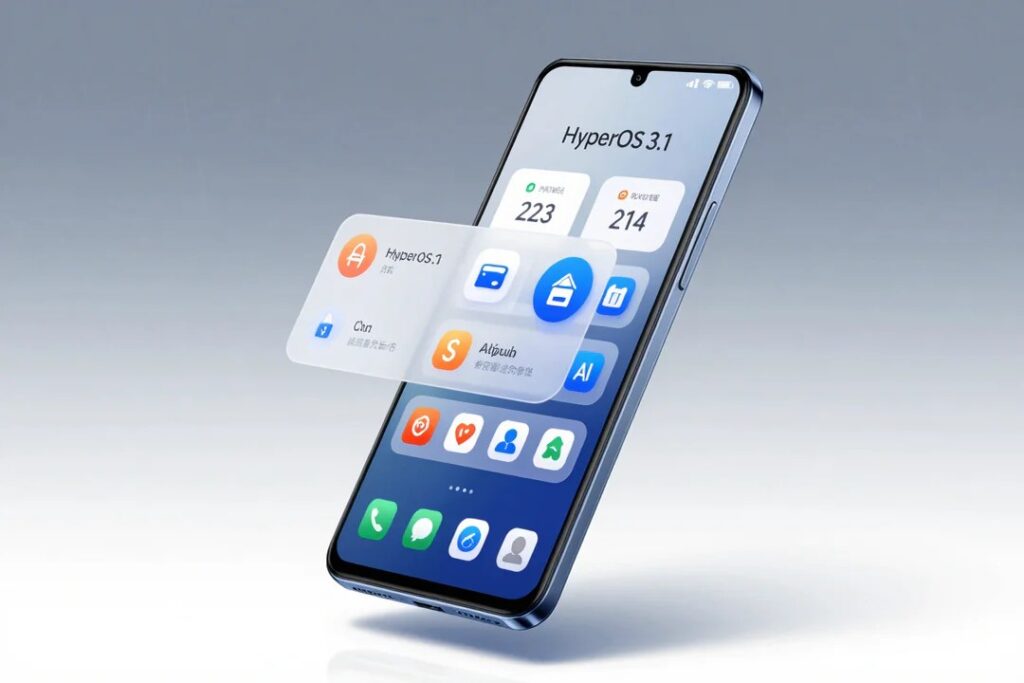
HyperOS 3.1 is Xiaomi’s proprietary interface built on top of Android 16. It adds exclusive visual layers, gesture systems, enhanced privacy controls, and hardware-specific optimizations tuned for Xiaomi chipsets and displays. The distinction matters because two phones can both run Android 16 but feel dramatically different depending on the manufacturer’s software layer.
Android 17 is Google’s next major platform release, expected in mid-2026. When it drops, Xiaomi will build HyperOS 4 on top of it, following the same pattern established with previous versions.
If you want to explore what is already available in the current generation, HyperOS 3 Global: which Xiaomi devices are getting it provides a comprehensive breakdown of the rollout in progress. For ongoing update status by region and build number, the HyperOS 3 Global Update Tracker is updated regularly with the latest available ROMs.
HyperOS Feature Advantages Over Stock Android
Beyond update longevity, HyperOS delivers several features that stock Android simply does not include. Fully customizable theme engines allow users to change system fonts, icon shapes, and color palettes beyond what Google’s Material You system permits. Advanced gesture navigation, granular per-app privacy permissions, and AI-powered photo editing tools are baked directly into the system layer.
Xiaomi has also implemented dynamic island-style notification handling through its own interpretation of persistent front-camera alerts — a feature explored in depth in HyperOS 3.1 Dynamic Island and Advanced Design Changes. This kind of UI innovation demonstrates how aggressively Xiaomi iterates on top of Android’s base, often shipping features months before they appear in competing skins.
The POCO Launcher, which offers an iOS-inspired app drawer and recents interface, is another example of Xiaomi’s willingness to redesign Android’s navigation paradigm rather than simply reskinning it. A detailed look at how this launcher integrates with recent HyperOS builds is available in POCO Launcher iOS Recents in HyperOS 3.
How to Prepare Your Xiaomi Device for Android 17
Before any major system update, a few standard precautions significantly reduce the risk of data loss or installation failure.
Back up everything important first. Use the Xiaomi Mi Cloud service or Google Drive to save photos, contacts, app data, and important documents. Both services can be configured for automatic sync in your device settings.
Make sure your device has at least 50 percent battery before starting the download and installation. Keeping the device plugged in throughout the update process is the safest approach. Large Android updates can require up to 5 gigabytes of temporary free space, so clearing out unused apps and media files beforehand is recommended.
To check whether an update is available, navigate to Settings → About Phone → System Version, then tap Check for Updates. Note that major HyperOS updates are released in staggered waves — even if your model is on the confirmed list, it may take several weeks after the initial rollout before the update appears on your specific unit.
If you want early access to new HyperOS features before the stable release reaches your device, Xiaomi’s Mi Pilot program offers beta enrollment directly through the device settings menu. For those already testing pre-release builds, the HyperOS 3.1 Beta for POCO and Xiaomi devices covers what new features arrive ahead of the public rollout.
Xiaomi vs. Samsung vs. Google: Who Offers the Best Software Support in 2026?
The long-term software support landscape has shifted considerably over the past two years. Google Pixel devices currently offer seven years of Android and security updates — the longest guarantee in the industry. Samsung commits to seven years of OS upgrades for select Galaxy S and Z series flagships, along with four years for many mid-range models.
Xiaomi’s approach is different: rather than matching Google’s seven-year commitment on a small number of premium devices, the company extends meaningful multi-year support across a vastly larger device catalog. The POCO C85 5G at $120 USD receiving Android updates through 2031 is a direct challenge to the notion that long-term support is a premium-only privilege.
The Redmi Note 15 series in particular — a mid-range lineup with six-year security support — sits comfortably ahead of Samsung’s Galaxy A series offerings on this metric. A Samsung Galaxy A55, for example, carries a four-year OS update commitment at a higher price point.
Where Samsung maintains an edge is rollout speed. Samsung often delivers major Android updates to its flagship lineup within weeks of Google’s official release. Xiaomi’s five-to-six-month window for mid-range devices is not unusual in the Android market, but it is longer than Samsung’s typical turnaround for its premium tiers.
Why the Redmi Note 14 5G Was Left Out — And What It Means for Buyers
The exclusion of the Redmi Note 14 5G from the Android 17 list is one of the most discussed data points in this round of announcements. The device launched relatively recently, and users who purchased it expecting typical Xiaomi mid-range support of three to four years are understandably frustrated.
Xiaomi has not issued a formal explanation. Industry observers point to two likely factors: the specific chipset used in the Note 14 5G may have compatibility or optimization limitations with Android 17’s requirements, or the decision reflects a deliberate commercial strategy to steer buyers toward Pro and Pro+ variants that carry more substantial update commitments.
This situation reinforces a practical rule for any Android purchase: always verify the official update support page before finalizing a buying decision, not after. Xiaomi’s AER portal is publicly accessible and provides end-of-life dates for all enterprise-recommended devices.
Security Benefits of Keeping Your HyperOS Device Updated
Software updates are not just about new features or a fresh visual design. Security patches represent the most critical component of any major operating system update. Each new HyperOS release carries fixes for vulnerabilities that malicious actors could otherwise exploit to access personal data, intercept communications, or install unauthorized software.
Google’s Android security bulletin is released monthly, and Xiaomi incorporates these patches into its update schedule. Devices that have passed their end-of-life date stop receiving these patches, which means identified vulnerabilities remain open indefinitely on those devices.
From a practical standpoint, an updated device also tends to perform better. Xiaomi’s engineers optimize the HyperOS code with each iteration, and these optimizations translate to measurable improvements in responsiveness, battery efficiency, and app launch times — particularly on mid-range and budget hardware.
There is also a resale value consideration. A Xiaomi 15T running Android 17 in late 2026 will command a meaningfully higher resale price than an equivalent device stuck on Android 15, simply because buyers prefer devices with remaining update support.
Conclusion: Your Xiaomi Update Date Matters More Than You Think
The information compiled in this article points to one clear conclusion: Xiaomi has made a serious and differentiated long-term software commitment that extends across its entire product range in a way few competitors match. Whether you own a $120 POCO C85 or a premium Xiaomi 15T Pro, your device’s update trajectory is now more transparent and more promising than at any previous point in the company’s history.
The key takeaways are straightforward. Check your device’s end-of-life date against the tables above. If your model shows less than a year of remaining support, factor that into your next upgrade decision. If your device is confirmed for Android 17, prepare your storage and backup plan for when the rollout reaches your region. And if you are shopping for a new device right now, the Redmi Note 15 series and Redmi Pad 2 line represent the strongest long-term software value propositions in their respective categories.
For ongoing tracking of exactly which build numbers are available in your region right now, be sure to check the HyperOS 3 Global Update Tracker in real time — it is the most up-to-date resource available for monitoring rollout progress by device and market.
Frequently Asked Questions About Xiaomi HyperOS Update Deadlines
Q1: How do I find my Xiaomi device’s HyperOS end-of-life date?
A: Go to Xiaomi’s official AER page or check Settings → About Phone → System Version and compare with the table above.
Q2: Will the Xiaomi 12 / 12 Pro receive Android 17?
A: No. Both models reach end-of-life in March 2026 and will not receive Android 17 or further security patches.
Q3: Which Xiaomi device has the longest software support right now?
A: The Redmi Pad 2 series leads with support through 2032 and five future Android versions including Android 20.
Q4: Is the POCO C85 5G worth buying for long-term support?
A: At ~$120 with Android updates through 2031 and four future OS versions, it’s among the best value propositions in budget Android.
Q5: Does HyperOS 3 run on Android 16 or Android 17?
A: HyperOS 3 is based on Android 16. HyperOS 4 will be based on Android 17 when it releases in mid-to-late 2026.
Q6: Why did the Redmi Note 14 5G get excluded from Android 17 updates?
A: Xiaomi has not confirmed why. Likely causes include chipset limitations or a deliberate product segmentation strategy favoring Pro models.
Q7: When will Android 17 stable roll out to Xiaomi devices?
A: Google targets mid-2026. Xiaomi flagships should follow immediately; mid-range models may wait 5–6 months after initial release.
Q8: Can I manually install Android 17 on my Xiaomi before the official rollout?
A: Beta access is available via Mi Pilot in settings. Stable manual flashing is possible but carries risk; follow official Xiaomi guides carefully.
Data sourced from Xiaomi AER (Android Enterprise Recommended) official portal and device launch announcements. Dates reflect official commitments as of early 2026 and are subject to change based on Xiaomi’s update policy revisions.

Valberth Vas, the expert behind TecnoVas Innovate, is the author of the company’s reviews and guides. His vast experience in the world of technology, with a particular focus on Xiaomi’s innovations, allows him to offer in-depth insights and clear guidance on the current technological landscape.