
Android 17 Officially Coming to Over 70 Xiaomi Devices
Xiaomi has just confirmed news that will delight millions of users worldwide. More than 70 devices from the Chinese manufacturer will receive the Android 17 update, including HyperOS 3.1 and the upcoming HyperOS 4.
If you own a Xiaomi, POCO, or Redmi device, it’s time to find out if your model made the official list. The company has released a clear policy on which smartphones and tablets will be eligible for the new operating system versions.
This means enhanced security, new features, and improved performance for those who already own a device from the brand. Let me break down everything you need to know about this update process in simple terms.
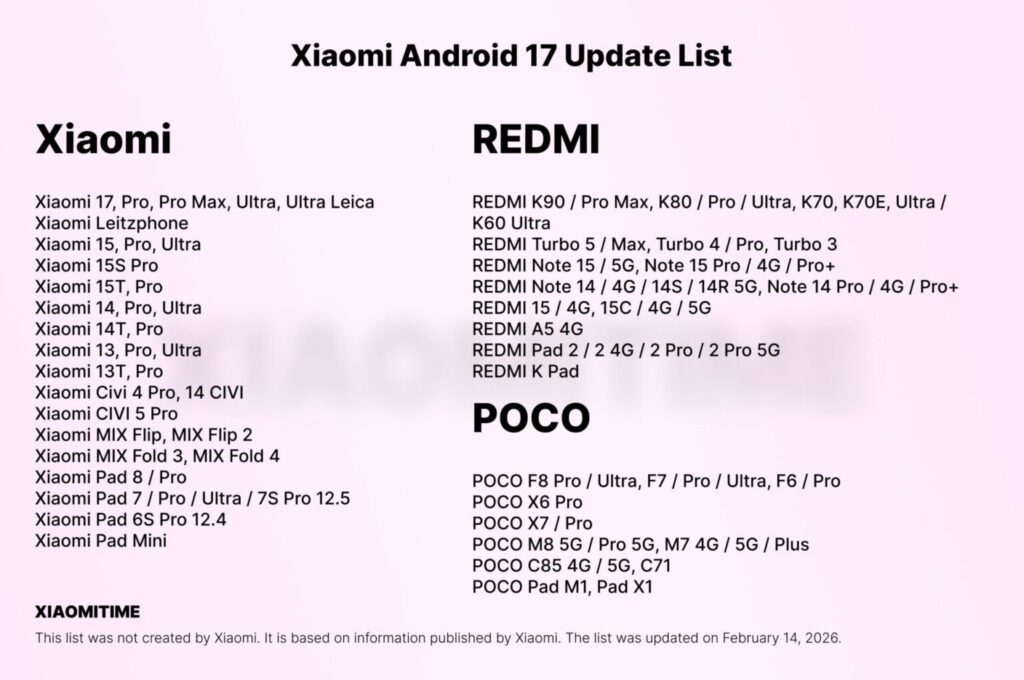
NOTE: This list was originally published by Xiaomi Time, based on the official Xiaomi AER page and update promises made during device launch events.
My Analysis – Valberth Vas: After reviewing the official data, I’ve identified several points that deserve attention. The exclusion of the Redmi Note 14 5G while the 4G version receives more updates raises questions about technical criteria versus commercial strategy. Additionally, budget models like the POCO C85 5G will have support until 2031 (6 years), which is impressive but also reveals inconsistencies in Xiaomi’s update policy.
How Xiaomi’s Update Schedule Works
Xiaomi operates differently from other manufacturers. When Google releases a new Android version, the company immediately begins developing two simultaneous updates.
First comes HyperOS 3.1, which is based on Android 16. This version serves as a testing ground for features that will arrive with Android 17. Shortly after, the manufacturer launches HyperOS 4, which brings the complete Android 17 experience.
This is why you might receive two major system updates in the same year. This strategy has been used since the days of the MIUI interface, the predecessor to today’s HyperOS.
Google has already released the first test build of Android 17. Xiaomi is using this version to test new functionalities in HyperOS 3.1. You can follow the development on our HyperOS 3 Global real-time update tracker.
What Changes with Android 17 on Xiaomi Devices
Although the first beta version of Android 17 hasn’t revealed major visual changes yet, the update will bring important improvements. We expect better battery optimization, enhanced security, and performance tweaks.
Xiaomi typically adds exclusive HyperOS features alongside Android updates. Features like the HyperOS 3.1 dynamic island and improvements to the POCO Launcher should arrive as well.
Complete List of 70 Models Receiving Android 17
The list was compiled based on official information from the Xiaomi AER page and update commitments announced during device launches. Here are all confirmed devices with support details:
Xiaomi 17 Series (2026 Launch)
The manufacturer’s newest lineup will have complete support from day one:
- Xiaomi 17 Ultra
- Xiaomi 17 Ultra Leica & Leitzphone
- Xiaomi 17
- Xiaomi 17 Pro
- Xiaomi 17 Pro Max
Xiaomi 15 Series (2025 Models)
The entire Xiaomi 15 family is guaranteed on the list. According to official Xiaomi AER data, these models will have extended support:
- Xiaomi 15 Ultra (Launch: February 2025 | Android 15 → Will receive: Android 16, 17, 18, 19 | Security support until: February 2031)
- Xiaomi 15 (Launch: February 2025 | Android 15 → Will receive: Android 16, 17, 18, 19 | Security support until: February 2031)
- Xiaomi 15S Pro
- Xiaomi 15 Pro
- Xiaomi 15T (Launch: September 2025 | Android 15 → Will receive: Android 16, 17, 18, 19 | Support until: September 2031)
- Xiaomi 15T Pro (Launch: September 2025 | Android 15 → Will receive: Android 16, 17, 18, 19, 20 | Support until: September 2031 | Frequency: 90 days)
Highlight: The Xiaomi 15T Pro will receive up to Android 20, making it one of the longest-supported devices on the list.
Xiaomi 14 Series (Previous Generation)
The 2024 flagship devices continue with robust support. Xiaomi AER data confirms:
- Xiaomi 14 Ultra (Launch: February 2024 | Android 14 → Will receive: Android 15, 16, 17, 18 | Support until: February 2029 | Frequency: 90 days)
- Xiaomi 14 (Launch: February 2024 | Android 14 → Will receive: Android 15, 16, 17, 18 | Support until: February 2029 | Frequency: 90 days)
- Xiaomi 14 Pro
- Xiaomi 14T (Launch: September 2024 | Android 14 → Will receive: Android 15, 16, 17, 18 | Support until: September 2029)
- Xiaomi 14T Pro (Launch: September 2024 | Android 14 → Will receive: Android 15, 16, 17, 18 | Support until: September 2029)
- Xiaomi 14 CIVI
- Xiaomi CIVI 4 Pro
- Xiaomi CIVI 5 Pro
Xiaomi 13 Series (Still Getting Updates)
The 2023 lineup will also receive Android 17. Official AER information:
- Xiaomi 13 Ultra
- Xiaomi 13
- Xiaomi 13 Pro
- Xiaomi 13T (Launch: September 2023 | Android 13 → Will receive: Android 14, 15, 16, 17 | Support until: July 2028 | Frequency: 90 days)
- Xiaomi 13T Pro (Launch: September 2023 | Android 13 → Will receive: Android 14, 15, 16, 17 | Support until: July 2028 | Frequency: 90 days)
POCO F Line (Powerful Value Devices)
POCO F models are known for strong performance and will now have extended longevity:
- POCO F8 Ultra (Redmi K90 Pro Max)
- POCO F8 Pro (Redmi K90)
- POCO F7 Ultra (Redmi K80 Pro)
- POCO F7 Pro (Redmi K80)
- POCO F7 (Redmi Turbo 4 Pro)
- POCO F6 Pro (Redmi K70)
- POCO F6 (Redmi Turbo 3)
POCO X Line (Popular Mid-Rangers)
These widely available devices will get Android 17:
- POCO X7 Pro (Redmi Turbo 4)
- POCO X7 (Redmi Note 14 Pro)
- POCO X6 Pro (Redmi K70e)
POCO M Line (Budget with Updates)
Even entry-level models will receive the new version:
- POCO M8 Pro 5G (Redmi Note 15 Pro+)
- POCO M8 5G (Redmi Note 15 5G)
- POCO M7 Plus (Redmi 15)
- POCO M7 5G (Redmi 14R 5G)
- POCO M7 4G (Redmi 15 4G)
POCO C Line (Affordable Basics)
Budget devices are also included. According to Xiaomi AER:
- POCO C85 5G (Redmi 15C 5G) – Launch: September 2025 | Android 15 → Will receive: Android 16, 17, 18, 19 | Support until: September 2031 | Available for around $120
- POCO C85 4G (Redmi 15C 4G) – Launch: September 2025 | Android 15 → Will receive: Android 16, 17, 18, 19 | Support until: October 2031
- POCO C71 (Redmi A5 4G)
Valberth Vas Analysis: The POCO C85 5G at $120 is one of the best purchases right now. Receiving 4 future Android versions (16, 17, 18, 19) with support until 2031 on a budget device is remarkable. Xiaomi is genuinely investing in software longevity.
Redmi Note 15 Series (Recent Launch)
The new Redmi Note lineup will have exceptional support. Official Xiaomi AER data reveals:
- Redmi Note 15 5G (Launch: January 2026 | Android 15 → Will receive: Android 16, 17, 18, 19 | Support until: January 2032 | Frequency: 90 days)
- Redmi Note 15 Pro+ (Launch: January 2026 | Android 15 → Will receive: Android 16, 17, 18, 19 | Support until: January 2032 | Frequency: 90 days)
- Redmi Note 15 Pro 5G (Launch: January 2026 | Android 15 → Will receive: Android 16, 17, 18, 19 | Support until: January 2032 | Frequency: 90 days)
- Redmi Note 15 Pro (Launch: January 2026 | Android 15 → Will receive: Android 16, 17, 18, 19 | Support until: January 2032 | Frequency: 90 days)
- Redmi Note 15 (Launch: January 2026 | Android 15 → Will receive: Android 16, 17, 18, 19 | Support until: January 2032 | Frequency: 90 days)
Valberth Vas Analysis: The Redmi Note 15 series has the most impressive support on the list. 6 years of security updates until 2032 and 4 future Android versions in a mid-range lineup. This puts Xiaomi ahead of many competitors in the segment.
Redmi Note 14 Series (Important Caveats)
Attention: Not all Note 14 models will receive Android 17. According to the official Xiaomi AER page, the Redmi Note 14 5G and POCO M7 Pro 5G were excluded.
Confirmed Note 14 series models with official data:
- Redmi Note 14 Pro Plus 5G (Launch: January 2025 | Android 14 → Will receive: Android 15, 16, 17 | Support until: January 2029 | Frequency: 90 days)
- Redmi Note 14 Pro 5G (Launch: January 2025 | Android 14 → Will receive: Android 15, 16, 17 | Support until: January 2029 | Frequency: 90 days)
- Redmi Note 14 Pro (Launch: January 2025 | Android 14 → Will receive: Android 15, 16, 17 | Support until: January 2029 | Frequency: 90 days)
- Redmi Note 14 4G (Launch: January 2025 | Android 14 → Will receive: Android 15, 16, 17, 18 | Support until: January 2031 | Frequency: 90 days)
- Redmi Note 14S
- Redmi Note 14 Pro 4G
Interesting fact: The Redmi Note 14 4G will receive Android 18 with support until 2031, while the Note 14 5G won’t even get Android 17.
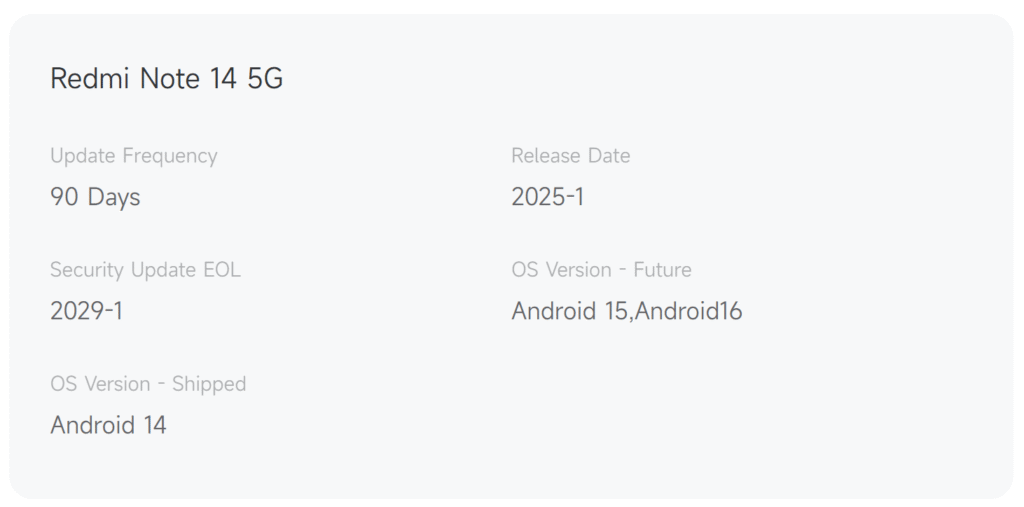
In Xiaomi’s most recent support policy update, one detail caught the community’s attention: the Redmi Note 14 5G was excluded from the list of devices receiving the new system version, while the 4G variant, launched during the same period, remains eligible with a broader update cycle. This decision generated strong user backlash, especially since both models were introduced at virtually the same time and belong to the same generation.
Valberth Vas Analysis: This Redmi Note 14 5G exclusion is controversial and will be the subject of my next article on TECnoVas Solution. How does a 4G device get more support than the 5G version launched simultaneously? Are we looking at specific technical limitations, such as chipset differences and compatibility with future system versions, or is this part of a commercial strategy for product line repositioning? I’ll investigate thoroughly.
The surprise was even greater after official confirmation in technical specifications published by Xiaomi itself, which states that the Note 14 5G is not included in the next major update schedule. This scenario raises important debates about transparency in software support and reinforces the need for consumers to analyze not just hardware and connectivity, but also update commitment before purchasing.

Redmi K Series (Powerful Chinese Versions)
The K models are value champions:
- Redmi K90 Pro Max
- Redmi K90
- Redmi K80 Ultra
- Redmi K80 Pro
- Redmi K80
- Redmi K70 Ultra
- Redmi K70e
- Redmi K70
- Redmi K60 Ultra
Redmi Turbo Series (Affordable Performance)
- Redmi Turbo 5 Max
- Redmi Turbo 5
- Redmi Turbo 4 Pro
- Redmi Turbo 4
- Redmi Turbo 3
Redmi Line (Standard Numbering)
Official Xiaomi AER data for the Redmi line:
- Redmi 15C 5G (Launch: September 2025 | Android 15 → Will receive: Android 16, 17, 18, 19 | Support until: September 2031)
- Redmi 15C 4G (Launch: September 2025 | Android 15 → Will receive: Android 16, 17, 18, 19 | Support until: October 2031)
- Redmi 15 (Launch: September 2025 | Android 15 → Will receive: Android 16, 17 | Support until: October 2029)
- Redmi 15 4G
- Redmi 15 5G (Launch: August 2025 | Android 15 → Will receive: Android 16, 17 | Support until: August 2029)
- Redmi 14R 5G
- Redmi A5 4G
Xiaomi Pad Tablets (Mobile Productivity)
Xiaomi tablets will also get the new system. AER information:
- Xiaomi Pad 8 Pro
- Xiaomi Pad 8
- Xiaomi Pad 7 Ultra
- Xiaomi Pad 7S Pro 12.5
- Xiaomi Pad 7 Pro (Launch: March 2025 | Android 15 → Will receive: Android 16, 17 | Support until: March 2028 | Frequency: 90 days)
- Xiaomi Pad 7 (Launch: March 2025 | Android 15 → Will receive: Android 16, 17, 18, 19 | Support until: March 2031 | Frequency: 90 days)
- Xiaomi Pad 6S Pro 12.4
- Xiaomi Pad Mini (Launch: September 2025 | Android 15 → Will receive: Android 16, 17 | Support until: September 2028)
Redmi Pad Tablets (More Affordable Options)
Tablet lineup with exceptional support according to Xiaomi AER:
- Redmi Pad 2 Pro 5G (Launch: September 2025 | Android 15 → Will receive: Android 16, 17, 18, 19, 20 | Support until: June 2032)
- Redmi Pad 2 Pro (Launch: September 2025 | Android 15 → Will receive: Android 16, 17, 18, 19, 20 | Support until: October 2032)
- Redmi Pad 2 4G (Launch: June 2025 | Android 15 → Will receive: Android 16, 17, 18, 19, 20 | Support until: July 2032)
- Redmi Pad 2 (Launch: June 2025 | Android 15 → Will receive: Android 16, 17, 18, 19, 20 | Support until: August 2032)
- Redmi K Pad
Valberth Vas Analysis: The Redmi Pad 2 tablets will receive 5 future Android versions (16, 17, 18, 19, 20) with support until 2032. That’s more support than many flagship smartphones from other brands. Xiaomi is taking tablets seriously.
POCO Pad Tablets (Market Entry)
- POCO Pad X1
- POCO Pad M1
MIX Line (Premium Foldables)
Xiaomi’s foldable devices are also guaranteed:
- Xiaomi MIX FLIP 2
- Xiaomi MIX FLIP
- Xiaomi MIX FOLD 4
- Xiaomi MIX FOLD 3
Complete Android 17 Compatible Device Table
| Global/POCO Model | Alternative Name | Category | Launch Year | Current Android | Will Receive Until | Security Support |
|---|---|---|---|---|---|---|
| Xiaomi 17 Ultra | Xiaomi 17 Ultra Leica | Flagship | 2026 | – | Android 17 | – |
| Xiaomi 15 Ultra | – | Flagship | 2025-02 | Android 15 | Android 19 | 2031-02 |
| Xiaomi 15T Pro | – | Premium | 2025-09 | Android 15 | Android 20 | 2031-09 |
| POCO C85 5G | Redmi 15C 5G | Entry | 2025-09 | Android 15 | Android 19 | 2031-09 |
| Redmi Note 15 5G | POCO M8 5G | Mid-range | 2026-01 | Android 15 | Android 19 | 2032-01 |
| Redmi Pad 2 Pro 5G | – | Tablet | 2025-09 | Android 15 | Android 20 | 2032-06 |
When Android 17 Arrives on Your Xiaomi Device
Xiaomi follows a release pattern familiar to longtime users. The first beta updates typically roll out during Google I/O, which happens in the spring.
For 2026, the Xiaomi 17, Xiaomi 17 Ultra, and Xiaomi 17T Pro models are expected to receive the beta version first. If the 17T Pro hasn’t launched by then, the Xiaomi 15T Pro will receive priority updates.
Expected Launch Timeline
Google should release the stable version of Android 17 between June and July 2026. Xiaomi typically makes the update available for its flagship devices on day one.
Mid-range and entry-level devices may take 5 to 6 months to receive the new version. This means all 70 models on the list will have Android 17 installed before the end of 2026.
If you’re having issues with previous updates, check out our complete tutorial on fixing HyperOS 3 update errors.
Difference Between Beta and Stable Release
The beta version is intended for developers and advanced users who want to test new features before the official release. It may contain bugs and instability.
The stable version is recommended for all users. It has passed all necessary testing and offers a more reliable experience.
Xiaomi makes beta updates available through the Mi Pilot program, which you can access in your device settings. If you’re participating in HyperOS 3.1 beta testing on POCO and Xiaomi devices, you’ll receive new features before other users.
Why Some Devices Were Excluded
The exclusion of the Redmi Note 14 5G from the list surprised many users. This model was recently launched and was expected to have longer support.
Xiaomi hasn’t officially disclosed the reasons, but experts point to several possibilities. One is hardware limitations of the processor used in this specific model.
Another explanation would be the company’s commercial strategy to differentiate product lines. Pro and Ultra models always receive more updates than basic versions.
What’s important is to always check the official Xiaomi updates page before buying a new device. This ensures you’ll have long-term support.
Valberth Vas Analysis: I’ll investigate this issue thoroughly in my next article on TECnoVas Innovate. Why does a 4G device launched simultaneously have more support than the 5G version? Are there such significant processor differences? Or is this just a strategy to push consumers toward Pro models? Stay tuned.
Differences Between HyperOS 3.1, Android 16, and Android 17
Many people confuse these three system versions. Let me explain simply how each one works.
Android 16 is the base system developed by Google. It brings core functionalities that all Android phones can use.
HyperOS 3.1 is Xiaomi’s interface built on top of Android 16. It adds exclusive features, customized visuals, and optimizations made by the Chinese manufacturer.
Android 17 is Google’s next major update. When it arrives, Xiaomi will launch HyperOS 4 based on this new version.
You can learn more about improvements already available in HyperOS 3 Global based on Android 16.
Advantages of HyperOS Over Stock Android
Xiaomi’s interface offers several functionalities that don’t exist in Google’s stock Android. These include customizable themes, advanced gestures, and more detailed privacy controls.
HyperOS also brings specific optimizations for processors used in Xiaomi devices. This results in better performance and longer battery life.
Features like the iOS-inspired dynamic island system show how Xiaomi innovates on top of Android’s foundation.
How to Prepare Your Xiaomi for Android 17
Before updating to any new system version, some precautions are important. First, make a complete backup of all your important data.
Use the Mi Cloud service or Google Drive to save photos, contacts, and documents. This way you won’t risk losing valuable information.
Make sure your device has at least 50% battery before starting the update. Ideally, keep the phone charging throughout the entire process.
Free up internal storage space. Major Android updates may need 5 GB or more of temporary free space.
Checking for Available Updates
To check if the update is available for your model, go to Settings > About phone > System version.
Tap “Check for updates” and wait. If there’s a new version, the system will show details and download size.
Remember that updates are released gradually. Even if your device is on the list, it may take a few weeks to reach everyone.
Benefits of Keeping Your System Updated
Updating the operating system goes far beyond getting new visual features. Updates bring essential security fixes to protect your personal data.
With each Android version, Google closes vulnerabilities that hackers could use to invade your device. That’s why it’s so important to install updates as soon as they become available.
Beyond security, you gain performance improvements. Xiaomi optimizes HyperOS code with each version, making the phone faster and more battery-efficient.
New features also arrive. Whether it’s a photo editing tool, advanced privacy controls, or interface improvements, there’s always something new to discover.
Impact on Resale Value
Devices with updated systems have higher resale value in the market. When you sell or trade your Xiaomi, having Android 17 installed will make a difference in price.
Buyers prefer phones that will still receive future updates. Therefore, choosing a model from the 70-device list is a smart investment.
Comparison with Other Manufacturers
Xiaomi stands out in the market for the support time offered to its devices. Few brands update more than 70 different models to the same Android version.
Samsung and Motorola also offer good support, but generally focus only on premium lines. Xiaomi brings updates even to budget devices like the POCO C85.
This strategy helps the brand build customer loyalty. When you buy a Xiaomi knowing you’ll have 3 or 4 years of updates, you feel more confident about the purchase.
Xiaomi vs Samsung in Updates
Samsung promises 4 years of Android updates for some flagship models. Xiaomi offers a similar period, but for a larger number of devices.
However, Samsung tends to be faster at releasing major updates. Xiaomi compensates with two major updates per year through the HyperOS system.
Each manufacturer has its advantages. What’s important is checking the support policy before choosing your next smartphone.
Valberth Vas Analysis: Looking at Xiaomi AER data, I see that some budget devices like the POCO C85 5G will have support until 2031 and receive Android 19. That’s more than many Samsung Galaxy A devices. Xiaomi is democratizing long-term updates.
Expected Features in Android 17 and HyperOS 4
Although the first build of Android 17 hasn’t revealed major changes yet, some improvements are already expected by the tech community.
Traditionally, Google focuses on three main areas: privacy, performance, and artificial intelligence. Android 17 should bring even more granular controls over app permissions.
Xiaomi typically adds its own features when launching HyperOS. Visual customization features, advanced gestures, and integrations with the brand’s product ecosystem are guaranteed.
AI integration should be enhanced. Smarter virtual assistants, AI photo editing, and automatic battery optimizations are some possibilities.
Privacy and Security Improvements
With each version, Android increasingly restricts app access to user data. Android 17 should continue this trend, giving more control over what information is shared.
Xiaomi adds extra security layers through HyperOS. Features like app locking, secure folder, and detailed permission controls are already reality.
HyperOS 4 is expected to bring new visual indicators when apps are using camera, microphone, or location. This increases transparency and user trust.
What to Do If Your Device Isn’t on the List
If your Xiaomi didn’t appear on the 70-model list, don’t panic. You’ll still have support for the current system version for some time.
Xiaomi continues releasing monthly security updates even for devices that won’t receive the next major Android version. This keeps your phone protected against threats.
Another option is considering an upgrade to a newer model. With the used market booming, you can sell your current device and invest in one that’s on the update list.
Watch for promotions. Devices like the POCO C85 5G ($120) and POCO X7 ($270) offer excellent value and are guaranteed to receive Android 17.
Custom ROMs as an Alternative
For more advanced users, there’s the option to install custom ROMs. Projects like LineageOS, Pixel Experience, and Evolution X bring newer Android versions to older devices.
However, this practice involves risks. You lose device warranty, may face bugs and instability, and some Xiaomi-specific features stop working.
I only recommend this path if you have technical knowledge and are willing to deal with possible problems. For most users, it’s better to use the official system.
Conclusion
The arrival of Android 17 for over 70 Xiaomi models represents an important milestone for the Chinese manufacturer. The company demonstrates commitment to its users by offering extended support even for entry-level devices.
If your device is on the official list, prepare to receive updates throughout 2026. The updates will bring enhanced security, better performance, and exclusive HyperOS 4 features.
For those planning to buy a device, choosing a model from the list guarantees a long-term investment. You’ll have an updated smartphone for at least 2 to 3 more years.
Stay tuned to our content so you don’t miss any news about Android 17 and HyperOS development. Keep following HyperOS 3 Global updates in real-time to know when new features arrive on your device.
Coming Soon: I’ll publish on TECnoVas Innovate my complete analysis of this list, questioning controversial exclusions and revealing whether Xiaomi is truly fulfilling its support promises.
Frequently Asked Questions About Android 17 on Xiaomi
1. When does Android 17 arrive on Xiaomi devices? Between June and July 2026 for flagships, by December 2026 for other models on the official list.
2. How many Xiaomi devices will receive Android 17? More than 70 models including smartphones and tablets from Xiaomi, POCO, and Redmi brands are officially confirmed.
3. Will the Redmi Note 14 5G receive Android 17? No. Xiaomi confirmed that the Redmi Note 14 5G and POCO M7 Pro 5G will not receive the update.
4. What is HyperOS 3.1 and how does it relate to Android 17? HyperOS 3.1 is based on Android 16 and serves as a testing ground for features coming in HyperOS 4 with Android 17.
5. Will budget devices like POCO C85 get Android 17? Yes. The POCO C85 5G and 4G are on the official list and will receive Android 17, 18, and 19 with support until 2031.
6. How do I check if my Xiaomi will receive the update? Check the official list in this article or visit the Xiaomi AER page at trust.mi.com for detailed information.
7. Can I participate in Android 17 beta testing? Yes, through the Mi Pilot program available in device settings for selected models.
8. Will I lose data when updating to Android 17? No, but it’s recommended to make a complete backup before any major update for safety.
Article by Valberth Vas for TECnoVas Innovate – Your source for in-depth tech analysis and Xiaomi updates

Valberth Vas, the expert behind TecnoVas Innovate, is the author of the company’s reviews and guides. His vast experience in the world of technology, with a particular focus on Xiaomi’s innovations, allows him to offer in-depth insights and clear guidance on the current technological landscape.