
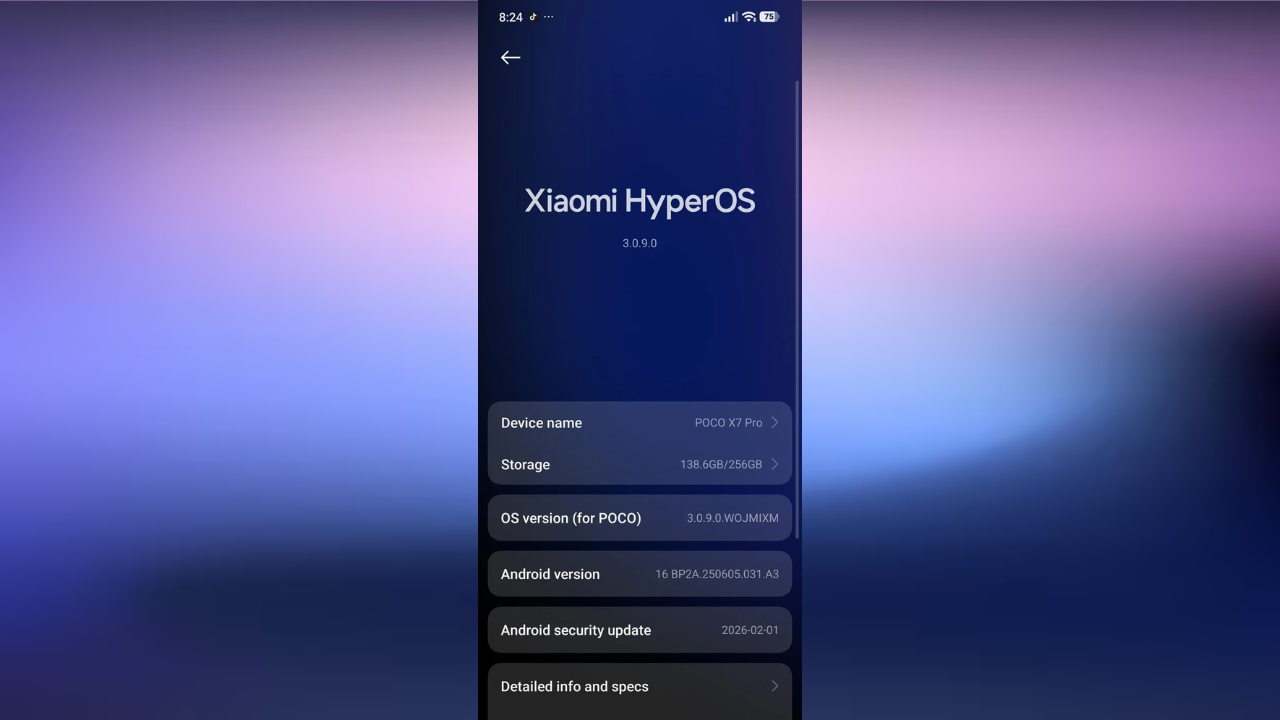
Xiaomi HyperOS 3 security update list: February 24, 2026
If you own a Xiaomi, POCO, or Redmi device and you’ve been wondering whether your phone is running the latest security patch, this tracker has everything you need. As of February 24, 2026, Xiaomi has already started rolling out the February 2026 Android Security Patch across a wide range of devices — and it includes models running HyperOS 3 (Android 16), HyperOS 2 (Android 15), and even older devices still on HyperOS 2 (Android 14). This is the most complete tracker available, with every build number, every region, and every device — no summaries, no shortcuts.
HyperOS 3 February 2026 Update: What’s New and Why It Matters
HyperOS 3 is Xiaomi’s most advanced operating system layer to date, built on top of Android 16. With this February 2026 update cycle, Xiaomi moved fast — releases started appearing before the calendar month had even fully kicked off, which reflects a clear shift in the company’s patching discipline compared to previous years.
According to the latest Android Security Bulletin published by Google, there are no critical zero-day vulnerabilities or actively exploited high-severity flaws flagged for this month. That’s genuinely good news. What this update cycle represents is a standard maintenance package: system stability improvements, minor bug fixes, protocol updates, and refinements to the overall user experience — rather than an emergency patch deployment.
That said, skipping updates is never a good idea. Even routine patches close low-to-medium severity gaps that accumulate over time. Keeping your Xiaomi device updated is one of the simplest and most effective security habits you can build in 2026.
What Changed with the HyperOS 3 Update? Full Changelog
Before diving into the device list, here’s a complete breakdown of what this update brings to HyperOS 3 devices:
Performance Enhancements
- Refined compiler instructions enhance performance and responsiveness while lowering power consumption
- Improved memory allocation and recovery increases available system memory
- Improved integrated frequency scheduling boosts system efficiency and reduces power use
- Short-video playback efficiency optimized for better battery life
- New window-rendering mechanism reduces graphics-rendering load
Smoother System Animations
- Fine-tuned animations across 100+ system scenes for smoother, more natural motion
HyperIsland Redesign
- New combined format merging Notification Spotlight and device notifications for faster access to important updates
- New UI design for at-a-glance detail viewing with smoother switching between islands
- Pull-down to expand small windows and handle multiple tasks simultaneously
Revamped Visuals
- Redesigned Home screen icons with sharper, more detailed appearance
- Home screen grid with more balanced margins and comfortable spacing
- Cleaner status bar design — more refined and easier to read
- New design system improving color comfort, unified rounded corners, and easier-to-use controls
- New large-clock Lock screen with added depth and layers
- New all-in-one editor for adjusting both Home screen and Lock screen wallpapers simultaneously
System App Optimizations
- Gallery: New widgets for preferred collections; pin albums for quick access
- Weather: Improved content card blur effects for smoother, immersive scrolling
- Calendar: New Week view; improved month-view visuals with clearer holiday highlights
- Recorder: Improved start page categories with icons; smart noise reduction for clearer playback
Privacy and Security
- Redesigned privacy and password interface with a cleaner, fresher look
- Advanced data protection now uses post-quantum encryption to keep personal data even more secure
Which Regions Get Updates First? An Insider Look
One consistent pattern across Xiaomi’s HyperOS update rollouts is that Global, EEA (Europe), and India regions tend to receive builds earlier than markets like Russia, Indonesia, Peru, and Taiwan. This likely reflects Xiaomi’s prioritization of larger user bases and stricter regional compliance requirements (especially in Europe under GDPR-related frameworks). If you’re in Europe or have a Global ROM, check your settings first — your update is probably already waiting.
For users in Indonesia and Taiwan, builds typically arrive within days of the Global release. Russian ROM builds and Peruvian (Latin America) builds often lag slightly behind but are consistently included in the same wave.
Full Device List: HyperOS 3 (Android 16) — February 2026
No summaries. Complete list with every build number and every region.
Xiaomi Series
| Device | Region | Build Number |
|---|---|---|
| Xiaomi Pad 7S Pro | China | OS3.0.10.0.WOTCNXM |
| Xiaomi MIX FOLD 3 | China | OS3.0.8.0.WMVCNXM |
| Xiaomi 15 | Global | OS3.0.6.0.WOCMIXM |
| Xiaomi 15 | Taiwan | OS3.0.3.0.WOCTWXM |
| Xiaomi 15 | India | OS3.0.4.0.WOCINXM |
| Xiaomi 15 | China | OS3.0.6.0.WOCMIXM |
| Xiaomi 14 | China | OS3.0.7.0.WNCCNXM |
| Xiaomi 14T | Europe (EEA) | OS3.0.9.0.WNEEUXM |
| Xiaomi 14T | Indonesia | OS3.0.2.0.WNEIDXM |
| Xiaomi 13T Pro | Europe (EEA) | OS3.0.3.0.WMLEUXM |
| Xiaomi 13T Pro | Europe (EEA) | OS3.0.4.0.WMLEUXM |
| Xiaomi 15T Pro | Global | OS3.0.11.0.WOSMIXM |
| Xiaomi 15T Pro | Europe (EEA) | OS3.0.13.0.WOSEUXM |
| Xiaomi 15T | Global | OS3.0.9.0.WOEMIXM |
| Xiaomi 15T | Europe (EEA) | OS3.0.10.0.WOEEUXM |
REDMI Series
| Device | Region | Build Number |
|---|---|---|
| REDMI Turbo 4 | China | OS3.0.4.0.WOJCNXM |
| REDMI K70 | China | OS3.0.9.0.WNKCNXM |
| REDMI K70E | China | OS3.0.5.0.WNLCNXM |
| REDMI K60 Ultra | China | OS3.0.4.0.WMLCNXM |
| REDMI Note 15 5G | China | OS3.0.4.0.WPQCNXM |
| REDMI Note 14 Pro 5G | Global | OS3.0.9.0.WOOMIXM |
| REDMI Note 14 Pro 5G | Europe (EEA) | OS3.0.3.0.WOOEUXM |
| REDMI Note 14 Pro 5G | China | OS3.0.3.0.WOOCNXM |
| REDMI Note 13R | China | OS3.0.2.0.WNUCNXM |
| REDMI Note 13 Pro 5G | China | OS3.0.6.0.WNRCNXM |
| REDMI Note 12 4G | Global | OS2.0.205.0.VMTMIXM |
| REDMI 15 | Russia | OS3.0.2.0.WBORUXM |
| REDMI 14C 5G | India | OS3.0.5.0.WGUINXM |
| REDMI 13 5G | China | OS3.0.2.0.WNUCNXM |
| REDMI 13 5G | India | OS3.0.10.0.WNUINXM |
| REDMI 13 | Global | OS3.0.6.0.WNTMIXM |
| REDMI 13 | Europe (EEA) | OS3.0.3.0.WNTEUXM |
| REDMI A3x | Global | V816.0.2.0.WGSMIXM |
POCO Series
| Device | Region | Build Number |
|---|---|---|
| POCO F6 Pro / Redmi K70 | Global | OS3.0.7.0.WNKMIXM |
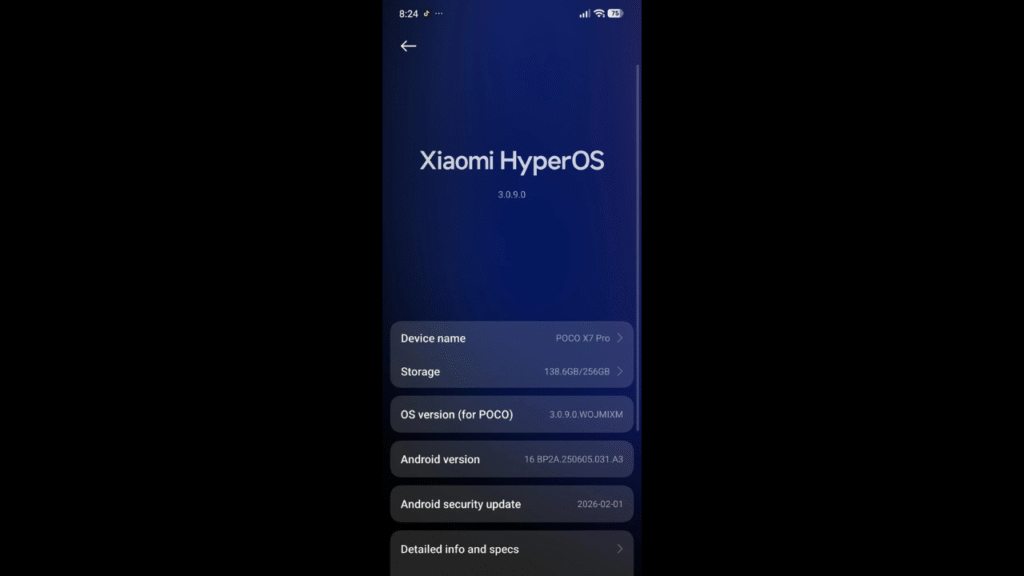
| POCO X7 Pro | Peru | OS3.0.5.0.WOJTRXM |
| POCO X7 Pro | Global | OS3.0.9.0.WOJMIXM |
| POCO X7 Pro | Europe (EEA) | OS3.0.5.0.WOJEUXM |
| POCO X7 Pro | Indonesia | OS3.0.3.0.WOJIDXM |
| POCO X7 Pro | India | OS3.0.4.0.WOJINXM |
| POCO X7 Pro | Russia | OS3.0.5.0.WOJRUXM |
| POCO X7 Pro | Taiwan | OS3.0.5.0.WOJTWXM |
| POCO X7 / Redmi Note 14 Pro | Global | OS3.0.9.0.WOOMIXM |
| POCO X7 / Redmi Note 14 Pro | Europe (EEA) | OS3.0.3.0.WOOEUXM |
| POCO X7 / Redmi Note 14 Pro | India | OS3.0.4.0.WOOINXM |
| POCO X7 / Redmi Note 14 Pro | Taiwan | OS3.0.2.0.WOOTWXM |
| POCO X7 / Redmi Note 14 Pro | Peru | OS3.0.2.0.WOOTRXM |
| POCO X7 / Redmi Note 14 Pro | Indonesia | OS3.0.2.0.WOOIDXM |
| POCO M6 / Redmi 13 / Redmi 13X | Global | OS3.0.6.0.WNTMIXM |
| POCO M6 / Redmi 13 / Redmi 13X | Europe (EEA) | OS3.0.3.0.WNTEUXM |
| POCO M6 / Redmi 13 / Redmi 13X | Peru | OS3.0.3.0.WNTTRXM |
| POCO M6 / Redmi 13 / Redmi 13X | Russia | OS3.0.3.0.WNTRUXM |
| POCO M6 / Redmi 13 / Redmi 13X | Indonesia | OS3.0.3.0.WNTIDXM |
| POCO M7 4G / REDMI 15 4G | Global | OS3.0.10.0.WBOMIXM |
| POCO M7 4G / REDMI 15 4G | Europe (EEA) | OS3.0.5.0.WBOEUXM |
| POCO M7 4G / REDMI 15 4G | Indonesia | OS3.0.4.0.WBOIDXM |
| POCO M7 4G / REDMI 15 4G | Russia | OS3.0.2.0.WBORUXM |
| POCO M6 Plus 5G / Redmi 13 5G / Redmi Note 13R | India | OS3.0.10.0.WNUINXM |
| POCO M7 | Russia | OS3.0.2.0.WBORUXM |
| POCO M7 5G | India | OS3.0.5.0.WGUINXM |
| POCO M6 | Global | OS3.0.6.0.WNTMIXM |
| POCO M6 | Europe (EEA) | OS3.0.3.0.WNTEUXM |
| POCO M6 Plus | India | OS3.0.10.0.WNUINXM |
Full Device List: HyperOS 2 (Android 15) — February 2026
| Device | Region | Build Number |
|---|---|---|
| Xiaomi 12T | Global | OS2.0.212.0.VLQMIXM |
| Xiaomi 12T | Russia | OS2.0.207.0.VLQRUXM |
| Xiaomi 12T | Taiwan | OS2.0.207.0.VLQTWXM |
| Redmi Note 12S | Peru | OS2.0.208.0.VHZTRXM |
| Redmi Note 12S | Russia | OS2.0.209.0.VHZRUXM |
| Redmi Note 12S | Taiwan | OS2.0.209.0.VHZTWXM |
| Redmi Note 12 4G | Global | OS2.0.205.0.VMTMIXM |
| Redmi Note 15 Pro 4G | Global | OS2.0.210.0.VPFMIXM |
| Redmi Note 15 Pro 4G | Europe (EEA) | OS2.0.207.0.VPFEUXM |
| REDMI Note 15 Pro 5G | India | OS2.0.203.0.VPPINXM |
| REDMI Note 15 Pro 5G | Peru | OS2.0.202.0.VPPTRXM |
| REDMI Note 15 Pro 5G | Europe (EEA) | OS2.0.204.0.VPPEUXM |
| REDMI Note 15 Pro 5G | Russia | OS2.0.202.0.VPPRUXM |
| POCO M7 Pro 5G / Redmi Note 14 | Global | OS2.0.211.0.VOQMIXM |
| POCO M7 Plus / REDMI 15 | Global | OS2.0.208.0.VOUMIXM |
| POCO C65 / Redmi 13C | India | OS2.0.205.0.VGPINXM |
| POCO C65 / Redmi 13C | Indonesia | OS2.0.205.0.VGPIDXM |
| Redmi 13C 5G / Redmi 13R | Taiwan | OS2.0.203.0.VGQTWXM |
| Redmi 13C 5G / Redmi 13R | Europe (EEA) | OS2.0.209.0.VGQEUXM |
| Redmi Pad 2 Pro 5G | Russia | OS2.0.203.0.VPXRUXM |
| Redmi Pad 2 4G | India | OS2.0.209.0.VOWINXM |
| POCO Pad / Redmi Pad Pro | Europe (EEA) | OS2.0.208.0.VNSEUXM |
| POCO Pad / Redmi Pad Pro | Russia | OS2.0.207.0.VNSRUXM |
| POCO Pad / Redmi Pad Pro | Peru | OS2.0.207.0.VNSTRXM |
| POCO Pad / Redmi Pad Pro | Indonesia | OS2.0.207.0.VNSIDXM |
| Redmi Pad Pro 5G | India | OS2.0.207.0.VFSINXM |
| Redmi Pad Pro 5G | Europe (EEA) | OS2.0.208.0.VFSEUXM |
| Redmi Pad SE | Global | OS2.0.207.0.VMUMIXM |
| Redmi Pad SE | Peru | OS2.0.203.0.VMUTRXM |
| Redmi Pad SE | Taiwan | OS2.0.202.0.VMUTWXM |
Full Device List: HyperOS 2 (Android 14) — February 2026
Xiaomi continues to support older devices under Android 14, ensuring security consistency for users who haven’t yet upgraded to a newer handset.
| Device | Region | Build Number |
|---|---|---|
| Redmi Note 12 Explorer / Redmi Note 12 Pro / Redmi Note 12 Pro+ | Peru | OS2.0.8.0.UMOTRXM |
| Redmi Note 12 Explorer / Redmi Note 12 Pro / Redmi Note 12 Pro+ | India | OS2.0.10.0.UMOINXM |
| Redmi Note 12 Explorer / Redmi Note 12 Pro / Redmi Note 12 Pro+ | Indonesia | OS2.0.12.0.UMOIDXM |
| Redmi Note 12 Explorer / Redmi Note 12 Pro / Redmi Note 12 Pro+ | Taiwan | OS2.0.8.0.UMOTWXM |
| POCO X5 Pro 5G / Redmi Note 12 Pro Speed | Indonesia | OS2.0.13.0.UMSIDXM |
HyperOS 3 and the Bigger Picture: What’s Coming for Xiaomi Users
The February 2026 security patch is just one chapter in a much larger story. Xiaomi has been aggressively expanding HyperOS 3 coverage across its lineup, with more than 70 devices expected to receive Android 17 further down the road. Understanding the deadline update roadmap for HyperOS on Xiaomi, POCO, and Redmi devices is key for users who want to know how long their device will be supported. The February 2026 batch proves that Xiaomi is not slowing down — devices from 2022 are still receiving patches alongside flagship 2025 models, which speaks to an increasingly mature update infrastructure.
Looking even further ahead, Xiaomi has outlined a plan to bring Android 17 to over 70 devices, a list that intersects significantly with the devices receiving HyperOS 3 right now. If your phone is on this February 2026 tracker, there’s a good chance it’s also in line for the next major Android version — making this update cycle particularly meaningful for long-term users.
One of the most talked-about features in HyperOS 3 has been its launcher redesign. The POCO Launcher with iOS-style recents in HyperOS 3 has drawn comparisons to Apple’s multitasking interface, with a cleaner card-based layout that many users find more intuitive. This February’s update continues to refine that experience with the animation improvements noted in the changelog above.
If your device isn’t showing an update yet but you’re eager to get there, some users have explored how to force HyperOS 3 on any Xiaomi device — though this carries risks and is best approached carefully. The staged rollout approach Xiaomi uses means that patience is usually the safer route, but understanding the process can help technically inclined users make an informed decision.
The HyperIsland feature introduced in this update is particularly noteworthy. HyperOS 3.1’s Dynamic Island-inspired advanced design takes the notification experience further than any previous Xiaomi OS, blending live activity data with system alerts in a persistent, elegant UI element. The February 2026 update refines this feature with smoother transitions and better multitasking support.
Finally, for a broader view of which Xiaomi global devices are receiving HyperOS 3, the global HyperOS 3 device update tracker remains one of the most comprehensive references available. This February’s batch aligns closely with that global rollout plan, confirming that Xiaomi is executing its expansion on schedule.
How to Check for Your February 2026 Update Manually
If your device isn’t showing a notification yet, you can check manually at any time:
- Open Settings
- Tap My Device
- Select Xiaomi HyperOS
- Tap Check for Updates
Xiaomi uses a staged rollout system, which means your update may be queued even if it doesn’t appear immediately. If you don’t see it today, check again in 24–48 hours.
Key Highlights at a Glance
- HyperOS 3 (Android 16) devices are receiving the February 2026 patch first
- No critical zero-day vulnerabilities in this month’s Android Security Bulletin
- Post-quantum encryption added to advanced data protection in HyperOS 3
- Global and European ROM devices typically receive builds before other regions
- Devices on HyperOS 2 (Android 14 and 15) are also included in this update wave
- 100+ system animation scenes refined for smoother motion
- New all-in-one wallpaper editor combining Lock screen and Home screen customization
- POCO X7 Pro received builds in the highest number of regions this cycle (7 regions)
- Xiaomi 12T on Android 15 reached build OS2.0.212.0.VLQMIXM globally
Conclusion
The February 2026 HyperOS 3 security update from Xiaomi is a strong showing for a month with no critical vulnerabilities — demonstrating that the company is using quieter security cycles to deliver meaningful quality-of-life improvements. From post-quantum encryption and refined HyperIsland notifications to smoother animations across more than 100 UI scenes, this is a meaningful release for device owners across the spectrum. Whether you’re running a flagship Xiaomi 15 on Android 16 or keeping your Redmi Note 12 going on Android 14, Xiaomi has your back this month.
Stay informed, keep your device updated, and check back here regularly as more devices receive their builds throughout February and into March.
Frequently Asked Questions (FAQ)
1. What is HyperOS 3 and which Android version does it use?
HyperOS 3 is Xiaomi’s latest OS layer, built on Android 16, available on flagship and mid-range Xiaomi, POCO, and Redmi devices.
2. Is the February 2026 Xiaomi update safe to install?
Yes. Google’s bulletin confirms no critical zero-days this month. It’s a stable maintenance update.
3. Which Xiaomi device received the most regional builds in February 2026?
The POCO X7 Pro received builds for 7 regions: Global, Europe, India, Peru, Russia, Taiwan, and Indonesia.
4. Does the February 2026 update include new security features?
Yes. It adds post-quantum encryption for advanced data protection on HyperOS 3 devices.
5. How do I manually check for the HyperOS update on my device?
Go to Settings > My Device > Xiaomi HyperOS > Check for Updates to trigger a manual check.
6. Why hasn’t my Xiaomi received the February 2026 update yet?
Xiaomi uses staged rollouts. If your device isn’t updated, wait 24–48 hours and check again manually.
7. Are Android 14 Xiaomi devices getting the February 2026 security patch?
Yes. The Redmi Note 12 series and POCO X5 Pro 5G on Android 14 are included in this update wave.
8. What is the biggest visual change in the February 2026 HyperOS 3 update?
The new all-in-one wallpaper editor lets users adjust both Lock screen and Home screen wallpapers together.
Want to go deeper into Xiaomi’s update strategy? Check out our real-time HyperOS 3 Global Update Tracker to follow every new build as it drops.

Valberth Vas, the expert behind TecnoVas Innovate, is the author of the company’s reviews and guides. His vast experience in the world of technology, with a particular focus on Xiaomi’s innovations, allows him to offer in-depth insights and clear guidance on the current technological landscape.