
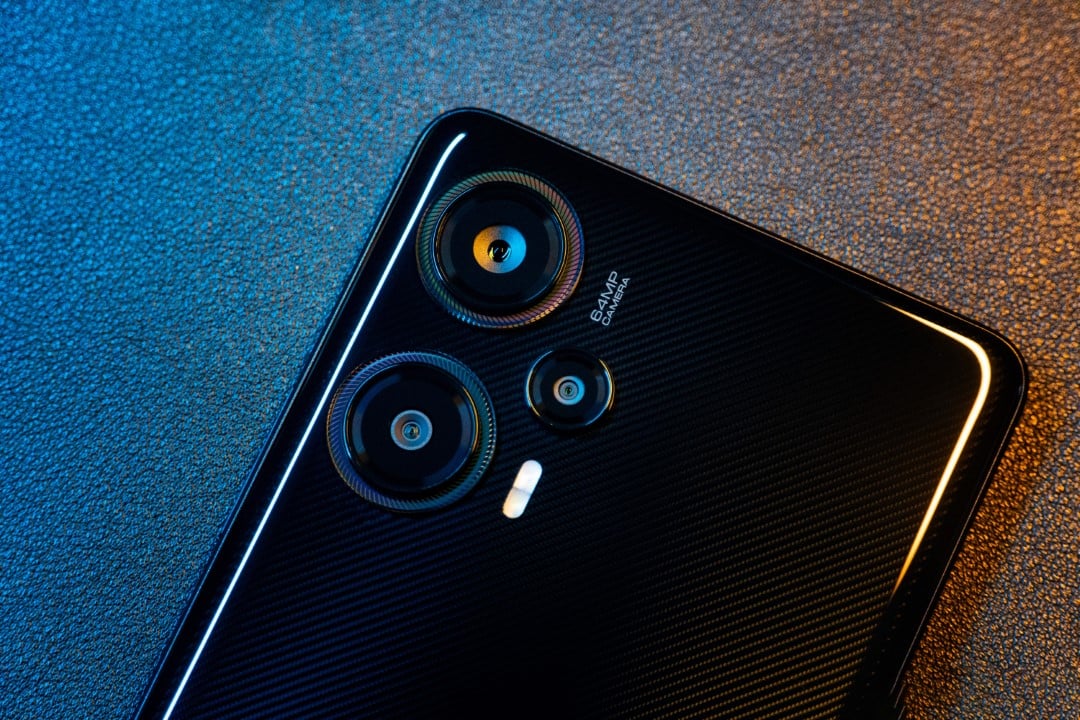
Confirmed: POCO F5 Gets HyperOS 3 with Android 15 – See When It Arrives!
POCO F5 receives HyperOS 3 with Android 15 soon. The update is already ready in China and should arrive globally in February 2026. See all official details, distribution schedule, and what to expect from this new system version.
The news caught many people by surprise. The POCO F5, launched in May 2023, was on the list of compatible devices, but few expected the update to arrive this early.
Xiaomi finished the HyperOS 3 beta testing for the model and already released the stable version in China. The REDMI Note 12 Turbo, which is the Chinese variant of the POCO F5, detected the update on official servers.
This means the timeline is being met. The company promised to bring HyperOS 3 in January 2026 and is keeping its word. For those who have the device, it’s time to get ready.
In this article, you’ll understand everything about this update. I’ll explain what changes, when it arrives, and why it matters. No complications, no beating around the bush.
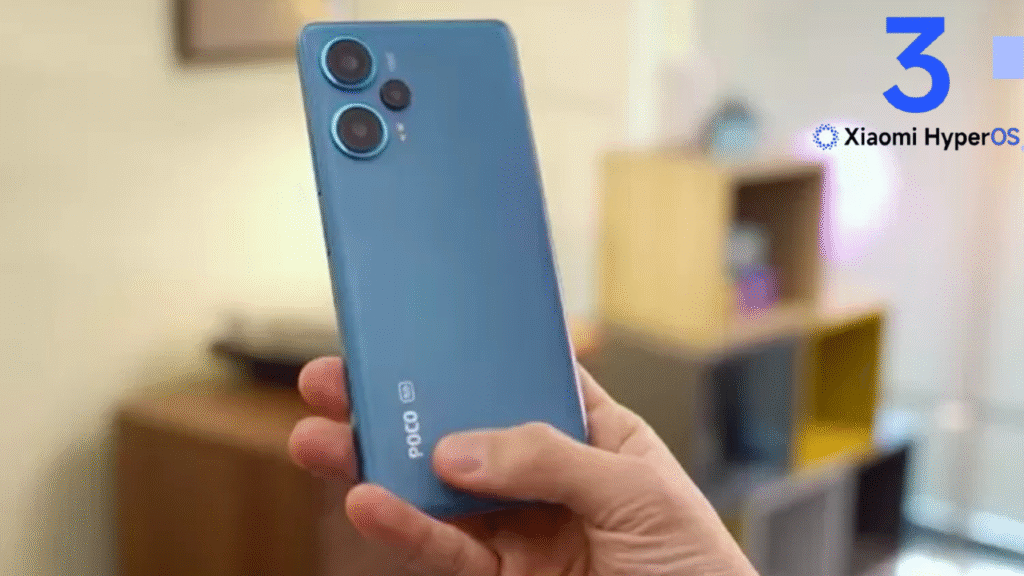
The POCO F5 and its complete update cycle
The POCO F5 hit the market in May 2023 with MIUI 14 and Android 13. From the start, the device showed it would have extended support. Xiaomi guaranteed three major Android updates for the model.
Official support is active until May 2026. This includes security patches, new features, and performance improvements. For a premium mid-range device, this is an important differentiator.
See how the update history went:
- May 2023: launch with MIUI 14 and Android 13
- November 2023: migration to HyperOS 1 with Android 14
- March 2025: update to HyperOS 2 with Android 15
- January/February 2026: arrival of HyperOS 3 with Android 15
Few devices in this price range receive three complete system versions. This shows the relevance of the POCO F5 in the brand’s portfolio. The device remains competitive even after almost three years since launch.
The internal codename of the POCO F5 is “marble”. This same code is used for the REDMI Note 12 Turbo, the Chinese version. That’s why whenever there’s news for one model, the other also receives it.
Most recent POCO F5 firmware versions
Before the arrival of HyperOS 3, the POCO F5 is running HyperOS 2 based on Android 15. Each region has its own optimized system version. See the complete updated list:
| Region | HyperOS 2 Version | ROM Code |
|---|---|---|
| Global | HyperOS 2.0.216.0 | VMRMIXM |
| Europe | HyperOS 2.0.208.0 | VMREUXM |
| India | HyperOS 2.0.207.0 | VMRINXM |
| Indonesia | HyperOS 2.0.210.0 | VMRIDXM |
| Russia | HyperOS 2.0.207.0 | VMRRUXM |
| Taiwan | HyperOS 2.0.206.0 | VMRTWXM |
| Turkey | HyperOS 2.0.210.0 | VMRTRXM |
| China (REDMI Note 12 Turbo) | HyperOS 2.0.215.0 | VMRCNXM |
These versions bring the most recent available security patch. The numbering varies because each region receives specific adjustments according to local requirements.
Regional distribution is a Xiaomi strategy to avoid widespread bugs. When an update is released first in China, the company can identify problems before expanding globally.
HyperOS 3 for POCO F5 is officially ready
Xiaomi finished testing HyperOS 3 for the POCO F5. The stable version was detected on the company’s official servers. The ROM code for China is OS3.0.1.0.VMRCNXM, which indicates it’s based on Android 15.
This is the REDMI Note 12 Turbo, which shares the same “marble” codename as the POCO F5. When the Chinese version is released, global versions follow shortly after. This is how Xiaomi’s update cycle works.
Distribution in China begins at the end of January 2026. Global regions should receive it in February 2026. This timeline follows the company’s standard pattern, which always tests first in the Chinese market.
The stable version brings all optimized Android 15 features integrated into HyperOS 3. This includes performance, security, and interface improvements. Xiaomi also added its own optimizations for the POCO F5 hardware.
How update distribution works
Xiaomi doesn’t release everything at once. Distribution happens in waves. First, a small group of users receives the update. If there are no serious problems, the release is expanded.
This process can take one to three weeks. So don’t worry if the update doesn’t arrive on the first day. It’s normal and part of the company’s security strategy.
You can follow the HyperOS 3 Global update tracker in real time. There, all releases are recorded as soon as they’re detected on official servers.
What changes with HyperOS 3 on the POCO F5
HyperOS 3 isn’t just a new number. It brings real changes you feel in daily use. Xiaomi focused on three main pillars: fluidity, integration, and security.
These aren’t empty promises. They’re adjustments designed for people who use their phone all day. I’ll explain each of these improvements carefully.
Faster and more stable system in daily use
The system became lighter. Opening apps, switching screens, and using gestures is faster. This happens because Xiaomi refined how the system uses the processor.
In practice, the phone thinks less before acting. Animations were optimized. More than 100 system transitions were adjusted to consume fewer resources.
Another important point is energy consumption. Even with more features, the battery tends to last longer. Smart background process management was improved.
The new graphics engine reduces visual weight. Less effort for the hardware, more comfort for the eyes. Colors became more natural and contrast was balanced.
Smarter memory management
Know when the phone closes apps by itself? This happens due to lack of available memory. In HyperOS 3, memory allocation was improved.
The system frees up space more efficiently. It identifies which apps you use most and keeps them always ready. Apps you rarely open are automatically closed.
Result: more apps open at the same time, without crashes. This is especially useful for those who use many messaging, social media, and work apps.
Xiaomi also optimized switching between heavy apps. Games, photo and video editors load faster when you return to them.
Advanced interconnectivity with other devices
Here’s one of the biggest new features of HyperOS 3. Integration between devices became much broader. And yes, there’s now compatibility even with Apple products.
You can unlock the POCO F5 using Touch ID, Face ID, or iPhone, iPad, or Mac password. It’s also possible to mirror the phone screen on the iPad, which helps with work, studies, or presentations.
On Mac, you can see the phone’s location, connect to the hotspot with one tap, and open multiple phone apps at the same time. All this requires minimum Apple system versions but works stably when configured correctly.
Apple devices must have the latest version of Xiaomi Interconnectivity installed for everything to work smoothly.
More complete and functional system apps
Native apps also received special attention in HyperOS 3. Xiaomi didn’t just focus on visuals but also on daily use practicality.
More organized and intuitive Gallery
Now you can pin favorite albums, use new custom widgets, and find photos faster with improved search. The interface became cleaner and editing options were expanded.
Automatic organization by date, location, and people became more accurate. Facial recognition was improved and now identifies faces more precisely.
More interactive and visual Weather
The weather app became more beautiful and functional. Visual effects show rain, temperature, and weather changes in real time. All without impacting performance.
Forecasts became more detailed. You see information about air quality, UV index, and hourly rain probability.
Improved Calendar and Recorder
The calendar gained clear weekly view. Holidays and events are more visible in the month. Google Calendar synchronization became faster and more stable.
The recorder now organizes audio better. Noise reduction makes voice cleaner. There’s also automatic transcription in multiple languages, making it easier to review meetings and notes.
Reinforced privacy and security in HyperOS 3
Security is a strong point of HyperOS 3. Personal data is more protected. Xiaomi implemented post-quantum encryption, which means protection against more advanced future attacks.
Password and privacy screens became simpler. Everything is easier to understand and configure. You have full control over which apps access location, camera, and microphone.
The system now warns when an app tries to access sensitive resources in the background. This increases transparency and gives you more decision-making power.
Renewed visual throughout the operating system
The entire system received visual adjustments. Sharper icons, more balanced home screen grid, cleaner status bar, and more comfortable colors.
The lock screen with large clock catches attention. It gives more depth and style to the device. Customization options were expanded.
You can choose between various font styles, icons, and animations. Dark theme was improved and now consumes less battery on AMOLED screens.
Update context in the HyperOS ecosystem
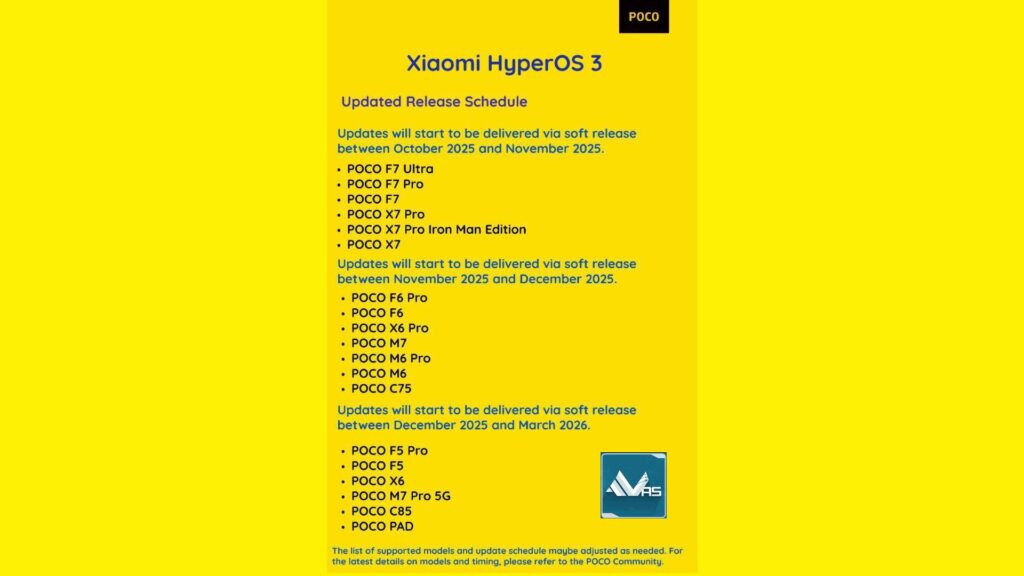
The arrival of HyperOS 3 on the POCO F5 is part of a larger movement. Xiaomi is accelerating the global system release. Other POCO models are also entering the list.
HyperOS 3 Global is already available on multiple Xiaomi devices, which shows the system is already in mature phase. Fewer bugs, more practical features, and more organized distribution.
The company learned from previous launches. HyperOS 1 had some stability issues at first. HyperOS 2 was already much more stable. Now, HyperOS 3 arrives even more refined.
Comparing with previous versions, HyperOS 3 delivers more stability. Cases like the POCO X7 Pro with stable HyperOS 3 reinforce this.
The POCO X6 Pro received its official HyperOS 3 release date, showing Xiaomi is keeping a consistent schedule across different device tiers.
To better understand HyperOS 3 reach, check the complete list of supported devices. There you’ll find all confirmed models and expected dates.
Xiaomi’s strategy is clear: bring as many devices as possible to HyperOS 3 still in 2026. Even the Redmi Note 13 Pro and POCO X6 received HyperOS 3 Global, showing the company isn’t leaving any device behind.
You can stay updated with daily Redmi, POCO, and Xiaomi updates about HyperOS to track when your device will receive the new version.
Main highlights of HyperOS 3 on POCO F5
- Faster and more stable system with processor optimizations
- Better memory and battery usage in daily use
- Smooth animations throughout the operating system
- Integration with iPhone, iPad, and Mac to unlock and mirror screen
- HyperIsland for smart and organized notifications
- More complete native apps like Gallery, Weather, and Calendar
- Advanced security with post-quantum encryption
- Renewed and more comfortable visual for the eyes
- Smart background app management
- Custom widgets and redesigned lock screen
- Automatic transcription in audio recorder
- Faster synchronization with Google services
- Full privacy control with real-time warnings
- Expanded compatibility with devices from other brands
- Official support guaranteed until May 2026
Conclusion
The POCO F5 with HyperOS 3 delivers a more mature experience. It’s not just aesthetics. The improvements are real in daily use. If you already received the update, it’s worth installing. If it hasn’t arrived yet, it’s just a matter of time.
Xiaomi is meeting the promised schedule. The device, launched in 2023, continues receiving full support. This shows the brand’s commitment to its users.
Keep following TECnoVas Innovate. Here you find guides, lists, and always updated news. If you want to dive deeper into Xiaomi news, also see our article about HyperOS 3 Global Update Tracker in Real Time.
For more information about HyperOS features and ecosystem, visit the official Xiaomi HyperOS Global page.
FAQ – Frequently asked questions about HyperOS 3 on POCO F5
Has the POCO F5 already received HyperOS 3? Not globally yet. The Chinese version is ready based on Android 15 and global arrives in February 2026.
What Android version is HyperOS 3 based on? It’s based on Android 15, bringing optimized features to the POCO F5 hardware.
Does the update improve battery performance? Yes. There are optimizations that reduce energy consumption in the device’s daily use.
Can I use integration features with iPhone and Mac? Yes, as long as Apple devices are updated with the most recent versions.
How long is POCO F5 support guaranteed? Official support is guaranteed until May 2026, with security updates and features.
When does the update arrive in the US? The forecast is February 2026, following the global version distribution of HyperOS 3.
Do I need to backup before updating? Yes, it’s always recommended to make a complete backup before any major update.
Will HyperOS 3 make the phone slower? No. The optimizations make the system faster and smoother than previous versions.